A feature developed for three weeks without being seen or tested can accumulate bugs and changes before anyone responds to it. Delivering smaller pieces gives customers and teammates something to react to sooner. Their responses can then shape the next piece of work. section 1.2
Make the first increment reviewable
For a new hello translation service, a README divides work into a one-day V0 and a seven-day V1. V0 calls for a simple API response, unit tests, onboarding documentation, and a version running beyond a developer’s machine. A live demo can invite feedback before translation and storage features are built. section 2.0
Delivery makes a product available for use; deployment also runs it as a service. Once people use an early product, feedback about what they want, like, or dislike can guide development. A delivery pipeline helps release each increment, and the team can improve the pipeline as well as the product. section 4.1
Feedback also happens inside the team. Ask questions and make comments during code review, stay open to other approaches, and use what you learn rather than repeating mistakes. Keep those conversations collaborative so they help the next change move forward. section 5.1.4 section 5.1.2
Figure 1.4 Product development goes through a life cycle that starts with raw materials and results in a product that customers provide feedback on, resulting in improvements and changes to the product.
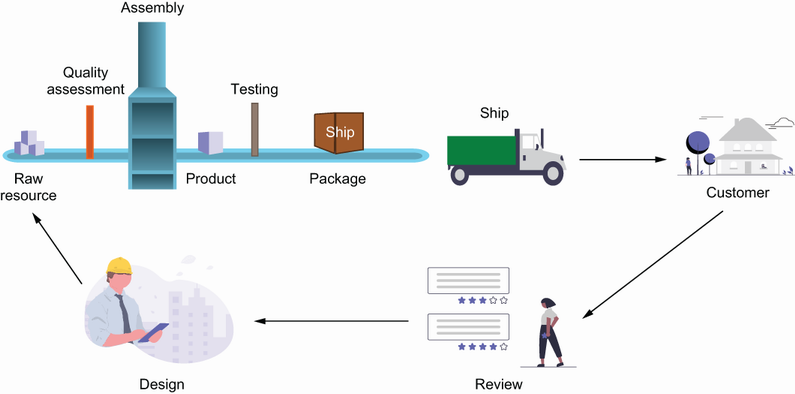
The product life cycle shows where customer feedback returns to drive improvements and changes. section 1.2