Customer feedback is information about needs, experiences, problems, or responses to a product or service. For an internal platform, it includes intentional comments from users and evidence that actual usage differs from stated plans. Treat feedback as input to continuous improvement, not as an automatic instruction to build every request. section 2.3.2
A platform team can capture feedback through an idea queue or Feature Request board rather than treating every item as a demand. Product owners review requests against platform goals, while production outages remain urgent exceptions. Stakeholders, user behavior, and wider community or market signals provide additional inputs. section 2.3.2
Use feedback to improve platform decisions by:
- Comparing what users say they will do with how they actually use existing capabilities. section 2.3.2
- Prioritizing a roadmap through user feedback and business objectives. section 10.8
- Delivering small platform increments, then incorporating continuous feedback loops. section 10.8
- Checking whether changes improve developer satisfaction and other platform success measures. section 10.8
Platform request triage
Developers submit an infrastructure change through a Feature Request board. The platform product team compares the request with observed usage, platform priorities, and business objectives, then accepts, reshapes, or denies it. A validated capability is delivered incrementally and evaluated through user feedback and developer satisfaction. section 2.3.2 section 10.8
Figure 2.11 Ideas, improvements, and sometimes requirements will come from a variety of sources. These four are the most important. And everything needs to successfully make it through the top row of our value flow in figure 2.9, except for production outages, of course.
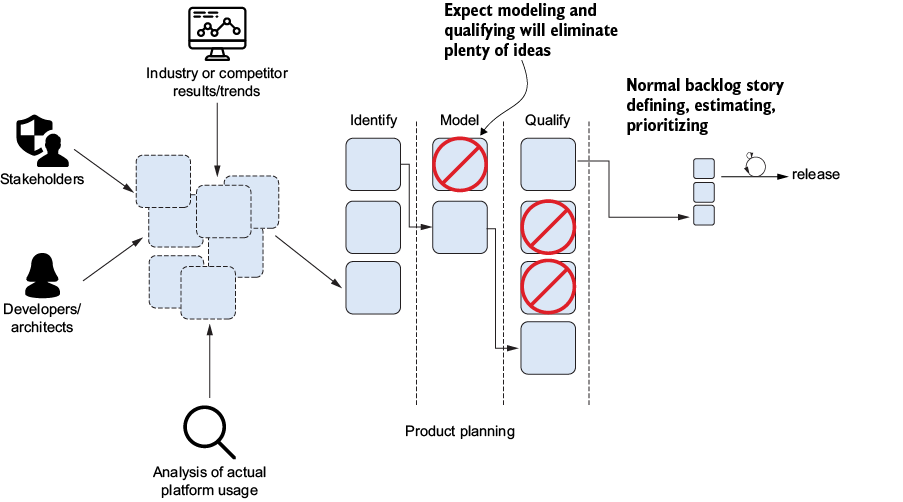
Map feedback sources across ideas, improvements, requirements, and other inputs before they enter platform value flow. section 2.3.2

















