A missing value is an absent or unavailable field value. Treat it as a data-quality finding, not automatically as an error: its importance depends on the field’s role in the analysis and on why it is absent. section 2.2.2 section 6.1.2
Start by counting missing values by column, then inspect affected rows and the data-generating context. Missing session or brand values may be harmless for a product-focused analysis, while missing addresses can block geographic extraction. section 4.4.1 section 6.4.1
Choose a response according to the analytical need and the evidence available:
- Drop rows when a required value is unavailable and the loss is acceptably small; 968 missing addresses out of 100,000 rows were removed before city analysis. section 2.2.2
- Keep rows when the missing field does not affect the current question, such as unknown sessions or brands in product exploration. section 4.4.1
- Assign an explicit placeholder when preserving the record matters, such as filling a missing street with “-- NO STREET INFORMATION --”. section 10.4.1
- Investigate high or unexpected missingness rather than treating it as random; survey omissions can reflect nonresponse, early exit, or conditional questions. section 6.1.2 section 6.4.1
Missing address data in a customer analysis
Before extracting cities from customer addresses, count nulls. With just under 1% missing addresses, dropping those rows is a workable compromise. At higher rates, investigate the cause, group records as “Other,” or seek another customer data source. section 2.2.2
Figure 6.7 Missing values for each column
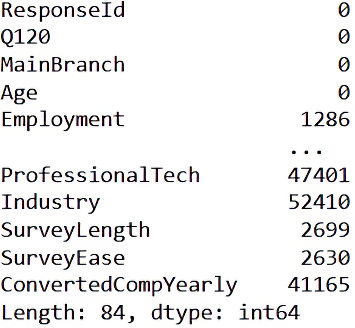
A per-column missing-value table helps identify which survey fields need contextual investigation before categorical analysis. section 6.4.1


































