liveBook · Manning

Drift

As explained in AI Governance

A change in a model’s behavior over time caused by model updates or changes in its inputs.

Drift is a change in a model’s behavior over time, caused by a vendor update or by inputs that differ from those used in earlier tests. section 3.1

Treat drift as a post-release governance risk: use incidents, audit findings, and user feedback to update policies, tools, rules, or configuration. section 3.1

Figure 3.1 The six governance levels before and after go-live. Level 6 routes operational findings back to the policy, assessment, implementation, or test that must change.
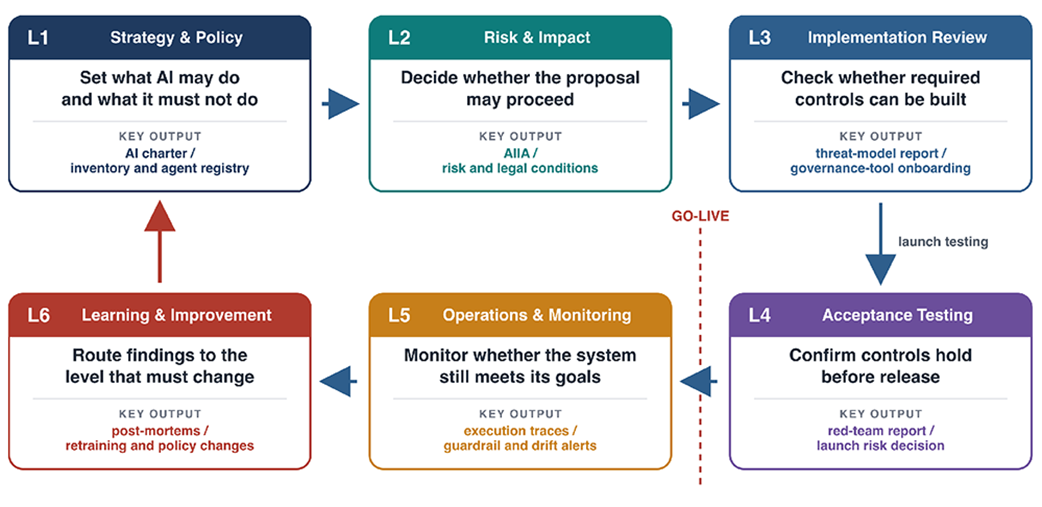
Use the governance loop to route operational findings to the policy, assessment, implementation, or test that needs revision. section 3.1


How AI Governance covers it

How deep it goes
Defines drift by its causes and connects operational findings to governance updates without detailing detection methods.
What you can do after
Operate a feedback loop that turns incidents, audit findings, and user feedback into policy, tooling, rule, or configuration updates.
How it connects
Links model updates and changing inputs with incidents, audits, user feedback, and governance revisions.

Also explained in

Compare how 18 books explain drift →

Related concepts

This explainer was generated by Manning's knowledge graph from the text of AI Governance. The section links point to the parts of the book it draws on.















