liveBook · Manning

Normalization

As explained in Building Web APIs with ASP.NET Core

Normalization is the organization of relational data into structured tables to reduce redundancy and preserve data integrity.

Normalization organizes relational data into fixed, related tables so each record is identified clearly and repeated information is reduced. This structure can preserve integrity, but it may require a more complex schema than a document-oriented design. section 4.1.1

A normalized SQL design typically uses:

  • Primary keys that uniquely identify records in each table. section 4.1.1
  • Reference columns, such as BoardGameID in Comments, to connect related records. section 4.1.1
  • Separate tables and junction tables for relationships such as BoardGames, Domains, and Mechanics. section 4.1.1
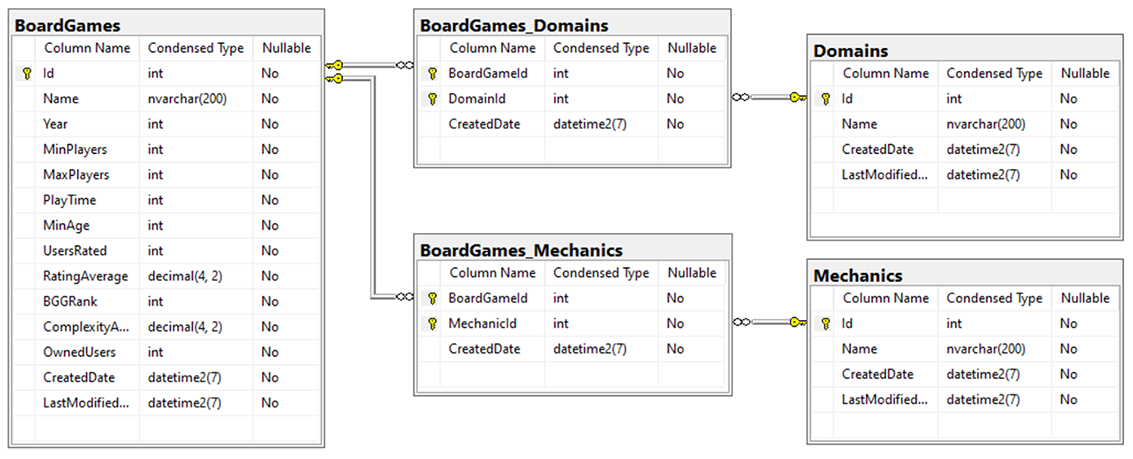
Figure 4.1 MyBGList database schema diagram for a table-oriented SQL database
04-01

Use the relational schema diagram to see how normalized tables and junction tables divide the board-game data. section 4.1.1


How Building Web APIs with ASP.NET Core covers it

How deep it goes
Explains primary keys, reference columns, fixed schemas, and junction tables, but stops short of normalization forms or procedural rules.
Examples
Uses BoardGames, Comments, Domains, Mechanics, and junction tables as concrete schema examples.
What you can do after
Evaluate whether related data belongs in normalized tables or embedded documents for a given application design.
How it connects
Connects normalization with primary keys, relational databases, fixed schemas, many-to-many relationships, denormalization, and NoSQL databases.

Also explained in

Compare how 21 books explain normalization →

Related concepts

This explainer was generated by Manning's knowledge graph from the text of Building Web APIs with ASP.NET Core. The section links point to the parts of the book it draws on.


















