Normalization organizes relational data into related tables so each fact lives in one place. It reduces duplicate data, helps maintain consistency, and makes updates less error-prone. section 10.2.1
An online store
Keep customer details in a Customers table and store only customer_id in Orders. When a customer changes their name, update Customers once rather than editing every order. The relationship does the joining work; thankfully, nobody has to chase duplicate names around the database. section 10.2.1
Normalization trades some query simplicity for cleaner data:
- Reduces storage waste by avoiding repeated values. section 10.2.1
- Improves data integrity because updates happen in one isolated location. section 10.2.1
- Can require more joins and create more complex or slower read queries. section 10.2.1
- Contrast denormalization when faster queries justify intentionally duplicated data. section 10.2.1
Figure 10.1 The Customers and Orders tables are related using the ID in the Customers table.
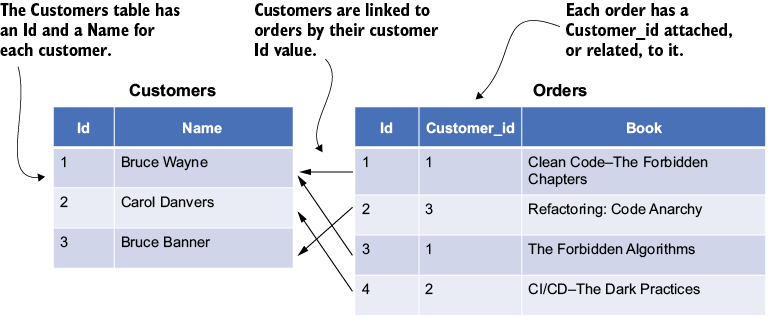
Use the Customers-and-Orders diagram to see how an identifier connects separate tables without copying customer details into every order. section 10.2.1




















