Optimization in cybersecurity is a repeating cycle of assessing tools and processes, planning changes, testing them, measuring their effects, and refining what comes next. A toolkit or metric that once worked can become less useful as threats, technology, or business needs change. The goal is not simply to add tools; it is to keep security effort aligned with current risk. section 2.5 section 2.5.2
Use a cycle that makes each change testable:
- Review tools, processes, recent incidents, and changing requirements to identify a gap. section 2.5.2
- Plan a targeted change, whether a new tool, a configuration adjustment, or a revised process. section 2.5.2
- Test the change in a controlled environment before full deployment, including its effect on performance and security posture. section 2.5.2
- Compare results with a baseline using measures such as detection rate, false positives, or incident response time; then refine the approach. section 2.5.2 section 11.1.1
Responding to increased phishing
A healthcare organization sees more phishing attempts against employees. It adds an anti-phishing tool, trains employees to recognize suspicious messages, and adjusts email alert thresholds. After deployment, it monitors detection and other results rather than assuming the additions worked. Feedback and new attack trends determine the next adjustment. section 2.5.2
Keep the measures themselves under review. Faster vulnerability patching may look like progress while a shift toward attacks on configuration errors goes unmeasured. Regular reviews with security teams and business leaders can expose outdated metrics. Set measurable goals, monitor trends, and change controls or training when results point to a specific problem. section 3.6.3 section 11.3
Figure 5.11 The left side shows TechGuardian Solutions’ gap analysis metrics dashboard before implementing a continuous improvement program. The right side shows the gap analysis metrics dashboard after implementing the program and tracking metrics over time.
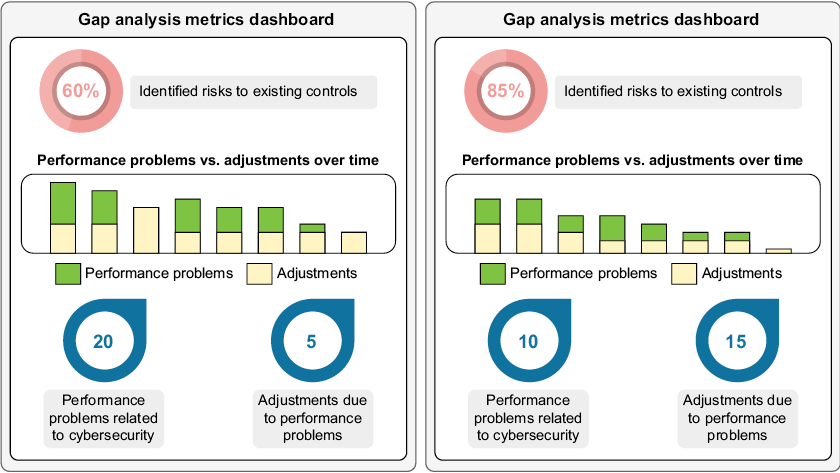
The before-and-after gap analysis dashboard makes progress visible, but its coverage measure needs a companion measure for whether identified vulnerabilities were resolved. section 5.6.5





























