Optimization is an iterative practice of improving a platform, process, or service through observed results and feedback. User behavior, stakeholder priorities, operational metrics, and external experience reveal where incremental changes can create greater value. section 2.3.2 section 10.4.3
Apply optimization as a feedback-driven operating pattern:
- Collect intentional feedback and compare claimed usage with actual user behavior. section 2.3.2
- Filter ideas through platform goals rather than treating every request as an approved requirement. section 2.3.2
- Review delivery and reliability measures regularly, then use the findings to improve processes and systems. section 10.3.3 section 10.4.3
A measurable improvement loop
Map current handoffs, bottlenecks, and feedback loops; collect deployment frequency, lead time, and failure-rate data; design a future-state process; and prototype CI/CD automation. Reliability teams can apply the same loop by reviewing SLOs and SLIs and balancing feature work against error budgets. section 10.3.3 section 10.4.3
Figure 2.11 Ideas, improvements, and sometimes requirements will come from a variety of sources. These four are the most important. And everything needs to successfully make it through the top row of our value flow in figure 2.9, except for production outages, of course.
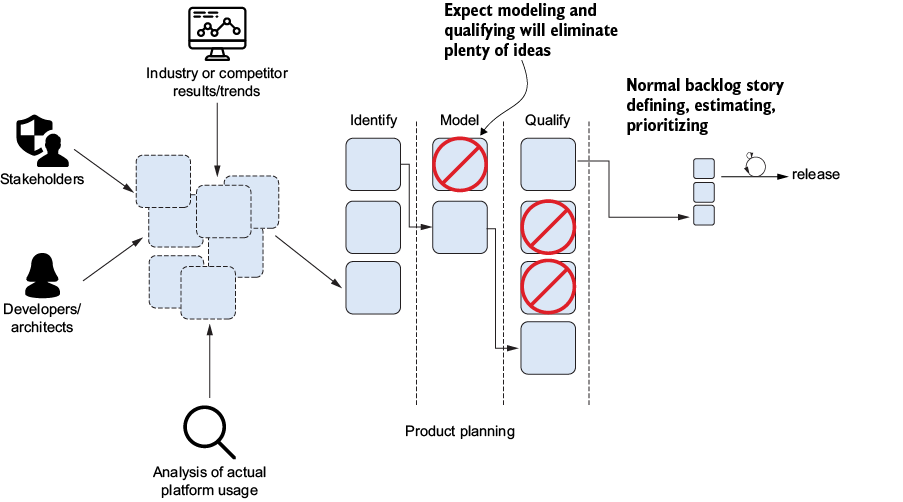
Use the figure to trace how ideas, improvements, and requirements enter a platform value flow from multiple sources. section 2.3.2





























