A population is a pool of candidate solutions maintained while a genetic algorithm searches for an efficient answer. Each candidate may represent a different route, distribution plan, or schedule. section 2.5
A genetic algorithm improves the population through repeated cycles:
- Evaluate candidates using fitness measures such as delivery time and cost. section 2.5
- Select stronger candidates, combine parts through crossover, and introduce occasional mutations. section 2.5
- Use the resulting candidates as a new population and repeat across generations until improvement stops or a cycle limit is reached. section 2.5
Supply-chain planning
A population can contain delivery routes, resource allocations, and schedules for a manufacturer. Combining a fast route from one candidate with another candidate's resource allocation may produce a more efficient plan. section 2.5
Figure 2.2 Flowchart of a genetic algorithm
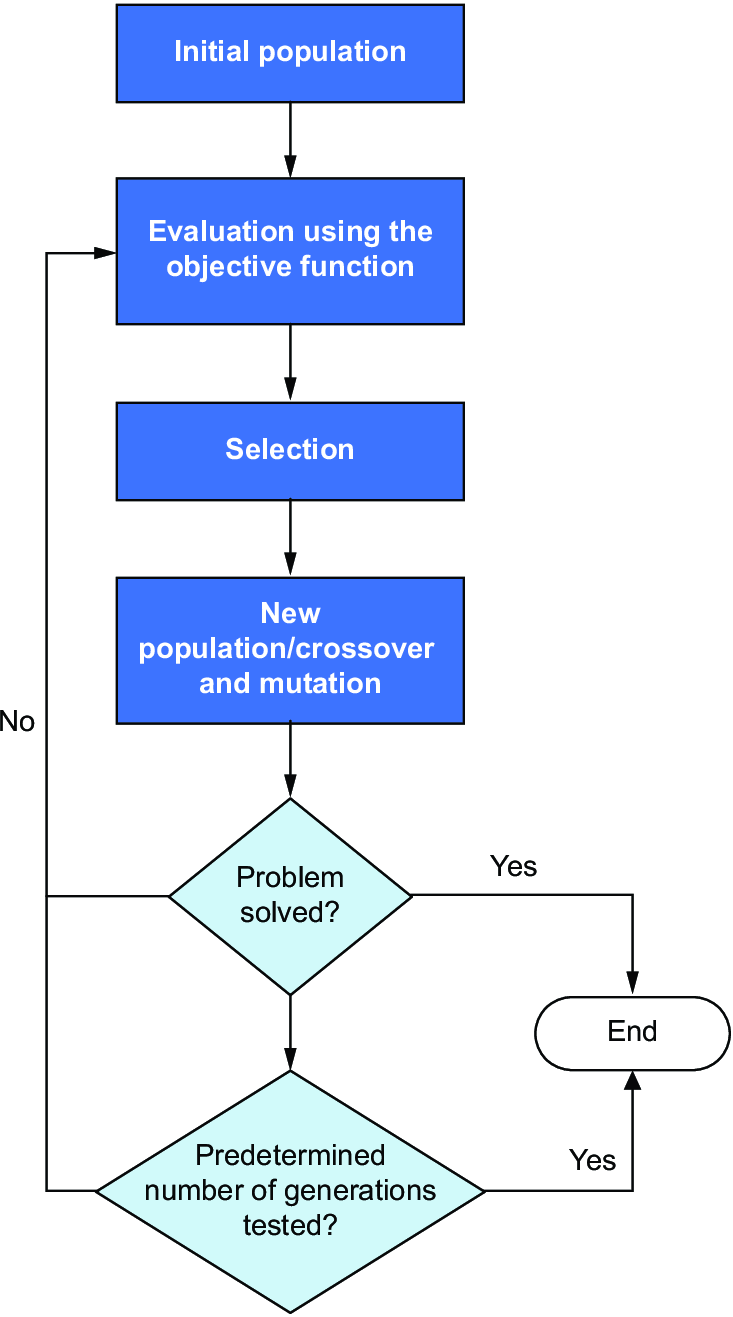
Use the flowchart to follow how evaluation, selection, crossover, mutation, and replacement transform one population into the next. section 2.5








