liveBook · Manning

Signal

As explained in Optimization Algorithms: AI techniques for design, planning, and control problems

A node feature is a value or vector associated with a graph node that describes its attributes for computation or learning.

A node feature is a value or vector describing a graph node. In graph learning, node features and an adjacency matrix define the problem before a GNN or GCN generates an embedding. section 11.7

For TSP, the pipeline uses the embedding to predict probabilities that nodes or edges belong to a solution, then searches for a feasible candidate. section 11.7
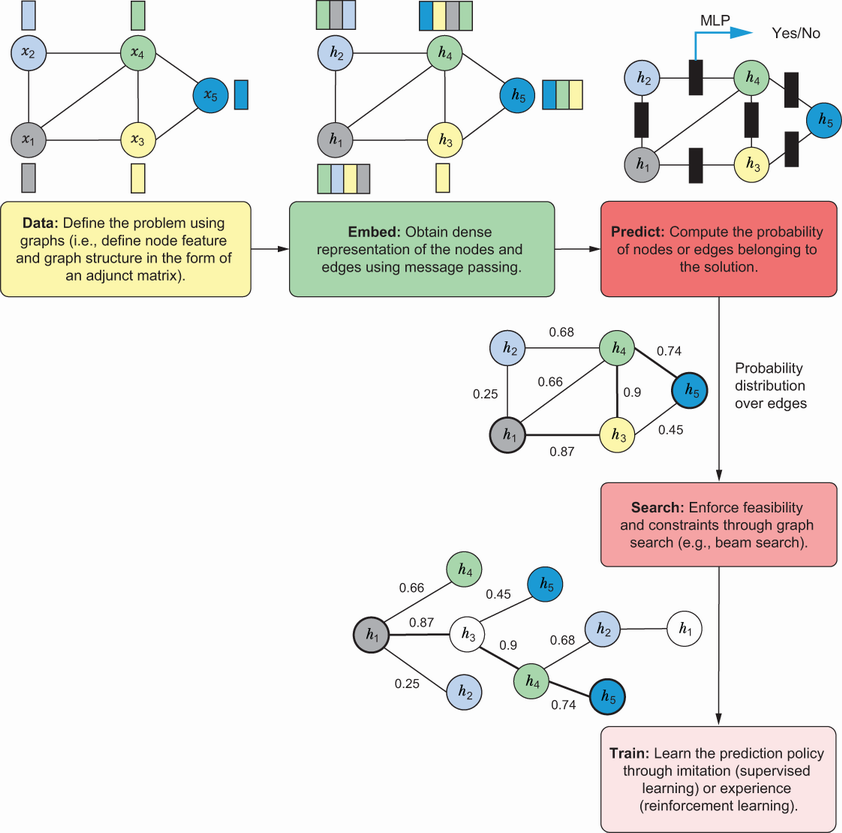
Figure 11.16 End-to-end pipeline for combinatorial optimization problems

The pipeline diagram shows where node features enter the graph-learning process. section 11.7

How Optimization Algorithms: AI techniques for design, planning, and control problems covers it

How deep it goes
Places node features before GNN or GCN embedding but does not detail how to construct or encode them.
Examples
Uses TSP as the graph-learning task and names VRP, SAT, MaxCut, and MIS as related optimization problems.
What you can do after
Understand how node features enter a graph-learning pipeline for predicting combinatorial optimization solutions.
How it connects
Connects node features to adjacency matrices, graph neural networks, graph convolutional networks, and multilayer perceptrons.

Also explained in

Compare how 10 books explain signal →

Related concepts

This explainer was generated by Manning's knowledge graph from the text of Optimization Algorithms: AI techniques for design, planning, and control problems. The section links point to the parts of the book it draws on.








