Authentication verifies the identity of a user, service, workload, or other system actor before a request proceeds. In cloud and cluster environments, it supports zero-trust service communication and controls who can access managed clusters. section 4.3.3 section 5.1.2
Common authentication mechanisms and their operational implications include:
- Use IAM roles to govern access to Google Kubernetes Engine clusters. section 5.1.2
- Use Kubernetes Service Account tokens when simple setup is important, but rotate and distribute tokens securely. section 5.1.2
- Use basic authentication only when an identity provider is unavailable; password management and leak response make it the least secure option. section 5.1.2
- Prefer OIDC with Google Cloud Identity, or compatible OIDC and LDAP providers, to centralize identity administration. section 5.1.2
- Use certificate authorities to issue workload certificates and establish strong service identities for mesh communication. section 4.3.3
Managed cluster access with OIDC
Configure OIDC with Google Cloud Identity so users can authenticate through the gcloud CLI or Google Cloud console. If KSA tokens are required, store them in Google Secret Manager, restrict retrieval with IAM permissions, and update them every seven days using Cloud Scheduler. section 5.1.2
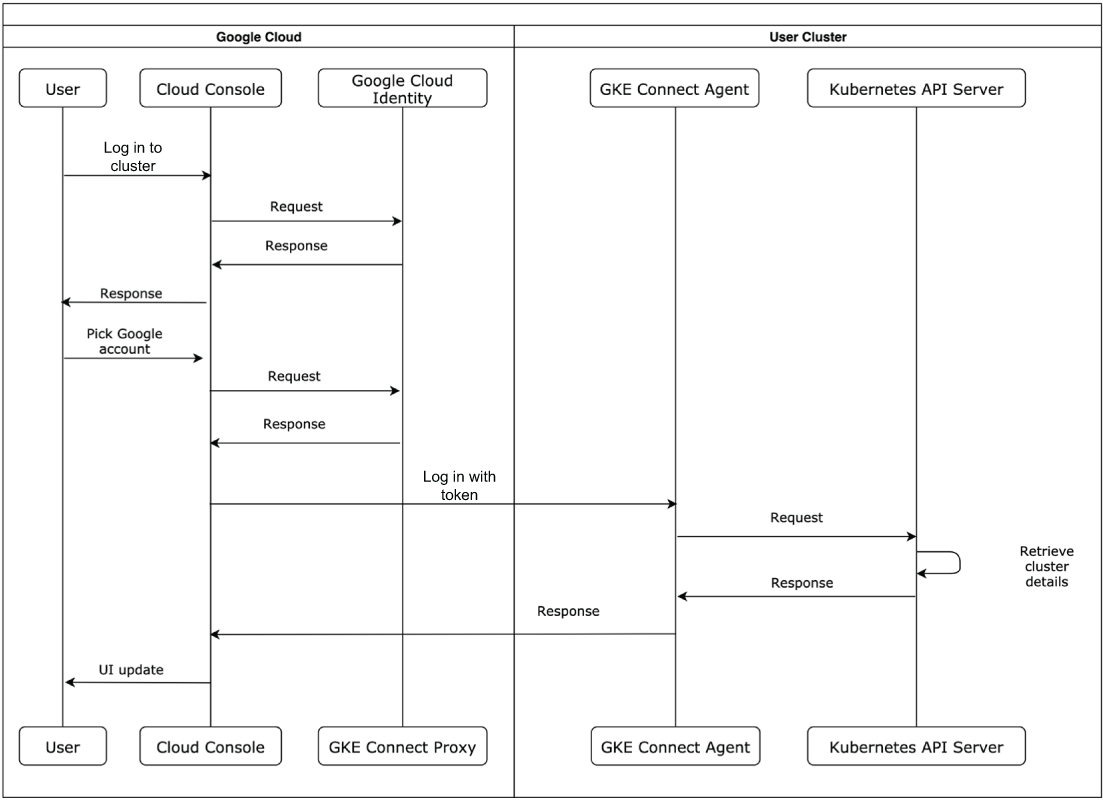
Follow the identity flow from a user through OIDC with Google Cloud Identity to an Anthos cluster. section 5.1.2

































