A goal states the desired outcome a system or design must achieve. It gives a design document a starting point, reduces uncertainty, and establishes boundaries for technical decisions. section 4.2 section 12.1
Use goals to keep an ML project aligned with the outcome that matters:
- Define the intended outcome before implementing the system or running an experiment. section 12.1
- Translate the goal into success criteria, metrics, and loss functions that support the project rather than merely optimize convenient proxies. section 4.2 section 5.3.3
- Pair the goal with antigoals: explicit exclusions that remove low-value requirements and expose tradeoffs. section 4.2
- Judge changes through offline evaluation first, then test real-world effects and business metrics online. section 12.0 section 12.1
A boutique recommendation system
Suppose a boutique store sells fewer than 1,000 goods and receives low traffic. Its goal may require useful recommendations, but not support for millions of items. Treating extreme scalability as an antigoal keeps attention on outcomes that affect the store rather than on unnecessary capacity. section 4.2
Figure 4.1 A shop with <1,000 goods for sale and low traffic should not aim for scalability when building a recommendation system, as almost any tech solution can handle its load these days.
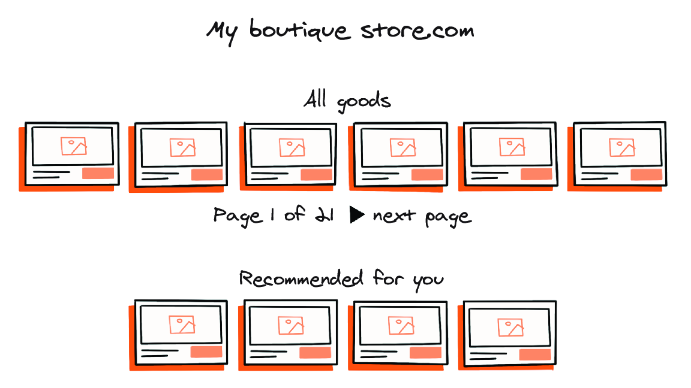
Use the figure to compare a system’s actual workload with tempting but irrelevant scalability targets. section 4.2










