A goal states what an article intends to achieve for its readers: what they should do differently, understand, or think about afterward. Write it before drafting, preferably as one clear sentence. Use it to focus the draft, decide what to cut, guide review, and judge whether the article is ready to ship. section 4.2 section 4.2.3
Make the goal useful rather than generic:
- Name the intended reader and the change you want to create for them. section 4.2.3
- Use the goal when deciding what to add, cut, or explain more fully. section 4.2.3 section 4.6.1
- Tell reviewers the goal so they can judge the draft against the intended outcome instead of offering unfocused comments. section 6.5.1
- Restate the goal in the introduction as the reader’s benefit, and make the promised experience clear. section 5.4.2
- Return to the goal after revision and ask whether the target reader will receive the main intended learning. section 6.4.3 section 7.2
A goal with two outcomes
A sample article about a database migration tool and Zig has two goals: convince database users to try the migration tool, and show that Zig can be used to create something useful. Those goals give the draft a practical audience outcome and a distinctive technical angle. section 4.2.3
Figure 4.1 It’s not all about you + your topic: writing also involves you + your reader and your reader + your topic.
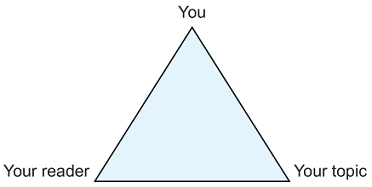
Use the reader–topic relationship to test whether the goal serves the audience, rather than merely expressing the writer’s interest in the topic. section 4.2.3










