A decision tree turns labeled data into a sequence of attribute-based questions. Each answer selects a branch, and a final leaf supplies a category or decision. section 3.1
The tree’s structure is inferred from data. Attribute values form branches, while mathematical measures help place the most discriminative questions near the beginning so decisions can be reached efficiently. section 3.1 section 3.2
Real-time credit-card fraud prevention
A bank can analyze 18 months of labeled transactions using purchase amount, timing, merchant type, location, and card presence. If international transactions show substantially more fraud, the first node asks whether a transaction is international or domestic. Each branch then receives further questions, producing an accept-or-decline assessment. section 3.2
Figure 3.1 The first few levels of a decision tree. In a real-world application, a full tree may contain thousands of nodes.
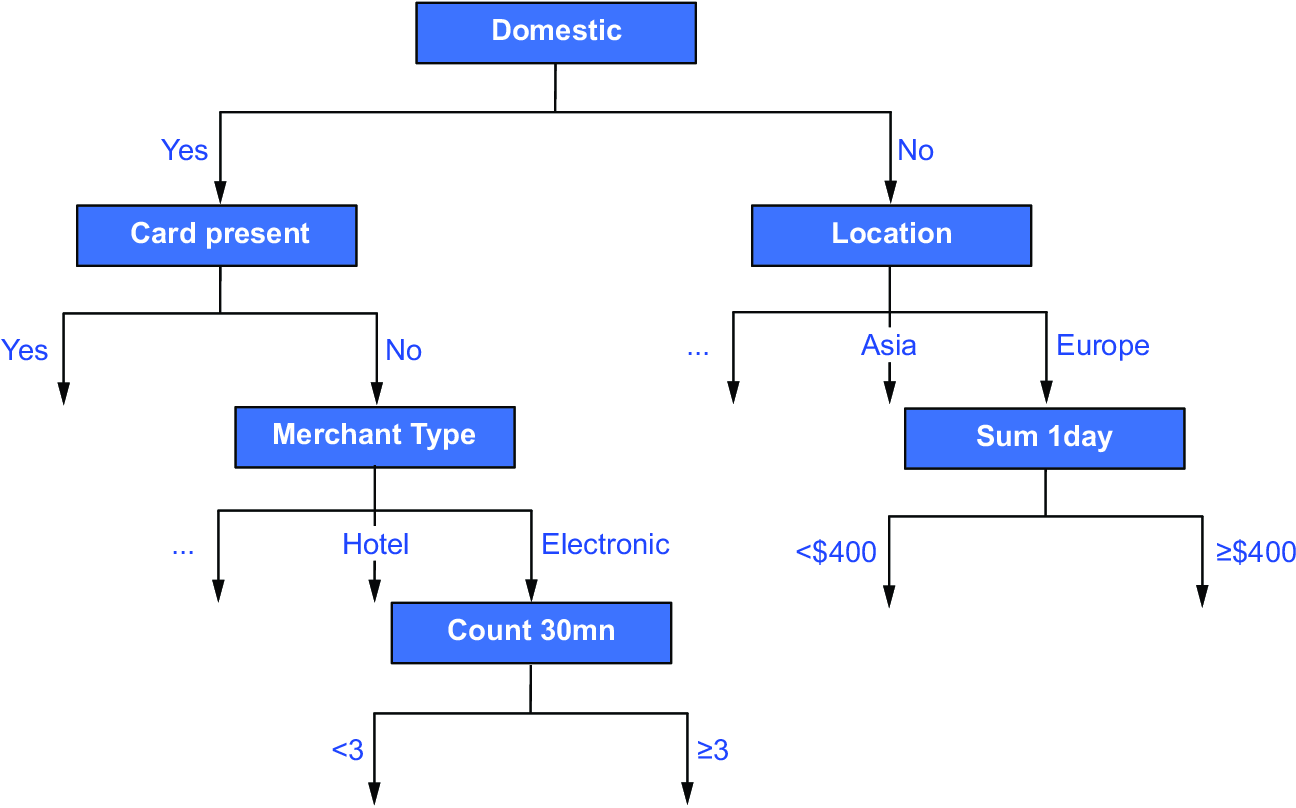
Shows the first levels of a decision tree and helps visualize how successive questions create branches toward terminal decisions. section 3.2












