A loan model can assign different predictions to people with the same repayment risk because historical loan officers treated genders differently, even when gender is not an input. Fairness therefore requires examining whether observed differences reflect specified equity criteria or reproduced prejudice. section 1.3.4
Causal analysis separates statistical bias into potentially unfair causes, such as direct sexism, and external pathways, such as advertising systems that target different applicant populations. A causal model can then focus prediction on variables causally relevant to repayment. It cannot decide fairness by itself: stakeholders must agree on outcomes and tradeoffs, including balanced gender outcomes versus advertiser pricing. section 1.3.4 section 1.6
Figure 1.3 A causal directed acyclic graph (DAG) showing how statistical bias against a particular gender could come from an algorithm directly penalizing that gender (unfair) and indirectly through gender discrepancies in applicants targeted by digital advertising algorithms (fair). Causal inference can parse the bias into fair and unfair sources.
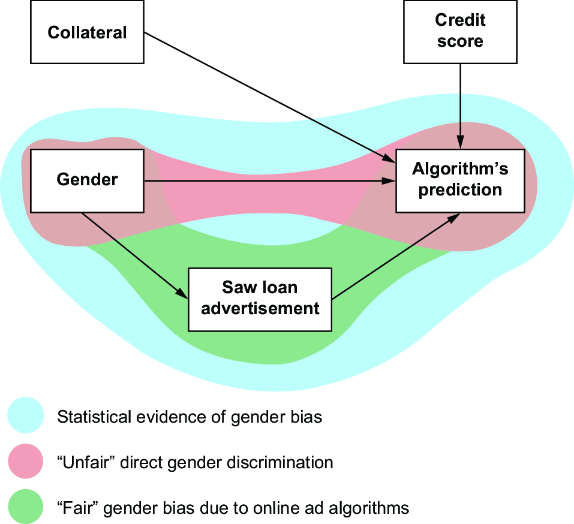
Use the causal DAG to trace bias through direct algorithmic penalties and indirect advertising-targeting pathways, then distinguish their causal sources. section 1.3.4









