A GPT model is a generative language model: software that creates new text from patterns learned from earlier data. GPT means Generative Pretrained Transformer. section 1.0 section 1.1
Given a prompt, it generates an output shaped by its training and the requested task. It can write, rewrite, add detail, or complete text, but fluent output is not automatically accurate. section 1.1 section 1.0
The name points to three ideas:
- Generative: produces new content rather than merely retrieving a stored answer. section 1.1
- Pretrained: learns from data before being used for particular interactions or applications. section 1.6
- Transformer: uses a neural-network component associated with GPT models and modern generative AI. section 1.6
A prompt and an output
Prompting ChatGPT to write a haiku about snow falling on pines produces a novel haiku by drawing on learned patterns about haikus, snow, pines, and poetry. section 1.1
Figure 1.2 Generative AI takes some input (numbers, text, images) and produces a new output (usually text or images). Any combination of input or output options is possible, and the nature of the output depends on what the algorithm was trained for. It could be to add detail, rewrite something to be shorter, extrapolate missing portions, and more.
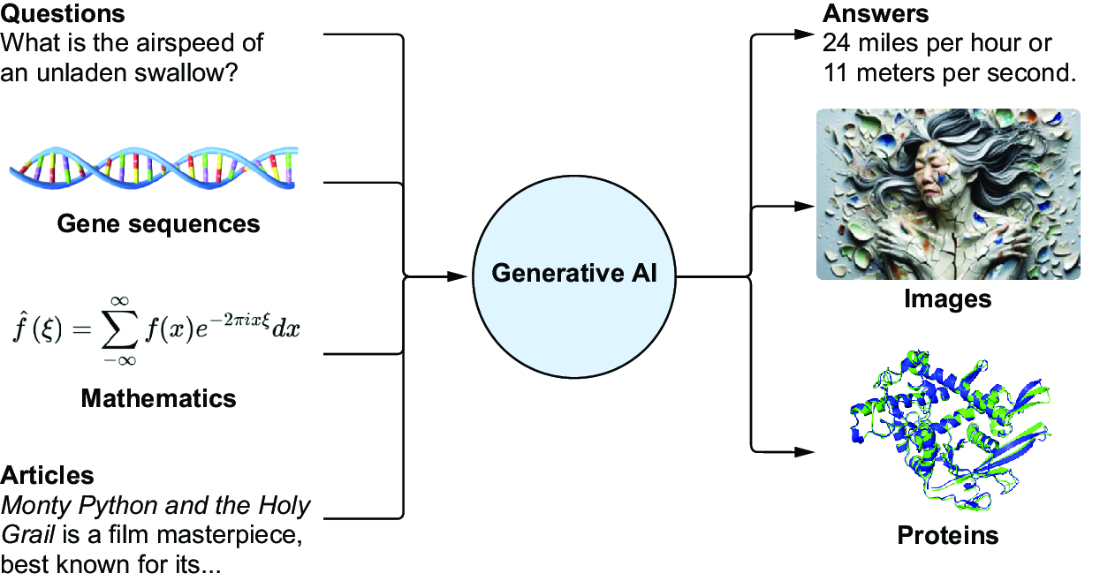
Trace how generative AI turns inputs such as text, images, or numbers into new outputs, with the result depending on training. section 1.1
GPT models are one family within the wider landscape of large language models. Their shared ideas apply across many systems, although commercial implementations may include private details and are not described down to code-level construction. section 1.6

















