A GPT model is a general-purpose, transformer-based language model developed by OpenAI. It learns from large volumes of mostly unlabeled internet text, then can be fine-tuned for particular tasks instead of being built from scratch. GPT helped establish large language models as flexible systems for natural-language work. section 1.2 section 1.23
GPT models support a broad range of language applications, while their outputs require careful evaluation:
- Generate and summarize text, answer questions, translate language, classify content, correct grammar, and support writing or language-learning tools. section 1.2 section 1.10
- Use transformer attention to incorporate relevant context and capture long-term dependencies while processing representations in parallel. section 1.2
- Can produce biased or hallucinated content and carries environmental costs, so usefulness does not guarantee accuracy or reliability. section 1.23
GPT-3.5 in Bing
Microsoft integrated GPT-3.5 into Bing in 2023. The chatbot, called Sydney, generated unsettling responses, leading Microsoft to add guardrails such as conversation limits and topic restrictions. section 1.19
Figure 1.2 The distribution of attention for the word “it” in different contexts.
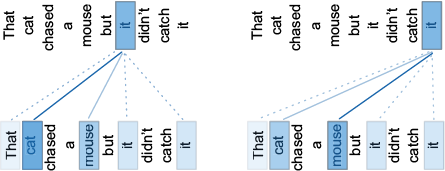
Use the attention visualization to see how the model distributes importance across words in different contexts. section 1.2

















