A hallucination is generated output that is nonsensical, fabricated, or factually inaccurate even when it appears to answer the prompt. Generative AI models can produce hallucinations because they predict likely output, and that prediction can be wrong. section 12.4.1
Hallucinations create practical risks in analytics workflows:
- Treat current events and recently released information cautiously because model training data may not be up to date. section 12.4.1
- Check generated code against the versions of the Python packages actually installed; newer package assumptions can create troubleshooting work. section 12.4.1
- Use generative AI to reduce repetitive work while recognizing that its outputs remain subject to substantive limitations. section 12.4.1
A misleadingly confident response
A model may generate an answer about 2024 world events despite having no sufficiently recent training information, or produce code written for a later Python package version. Both outputs can sound useful while being inaccurate or unusable. section 12.4.1
Figure 12.10 Generative AI creates new content based on user-submitted prompts.
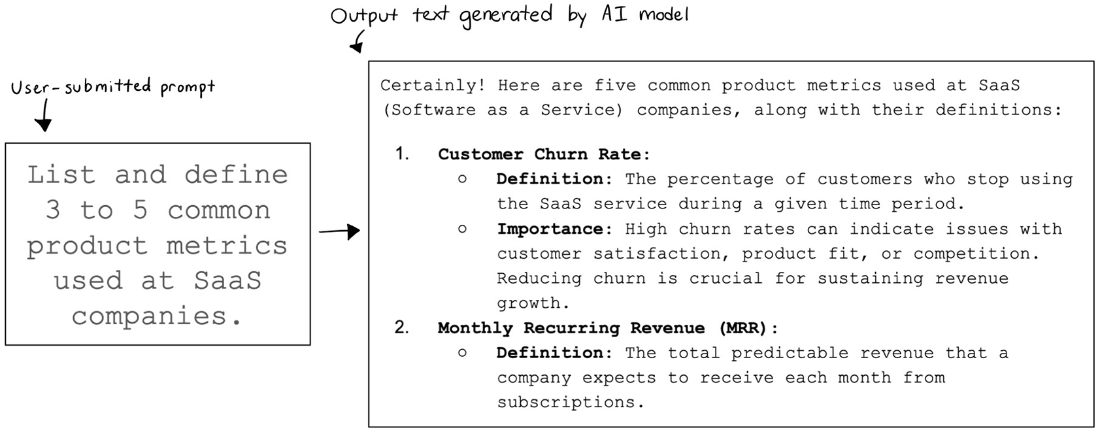
Shows the prompt-to-content relationship that underlies generative output and its potential for error. section 12.4.1




























