An AI hallucination is a plausible-sounding response that presents incorrect or completely invented information as factual. It happens because a large language model generates text from statistical patterns rather than from an understanding of facts. section 9.6.1
When building an AI-powered application, keep these practical points in mind:
- A model can confidently produce misleading questions or answers, even when the wording sounds convincing. section 9.6.1
- Probabilistic token generation can make outputs vary, but changing response variability does not guarantee factual accuracy. section 9.6.1
- Connecting the model to external information can reduce hallucinations, although no strategy guarantees that they will disappear. section 9.6.1 section 10.5
An invented product answer
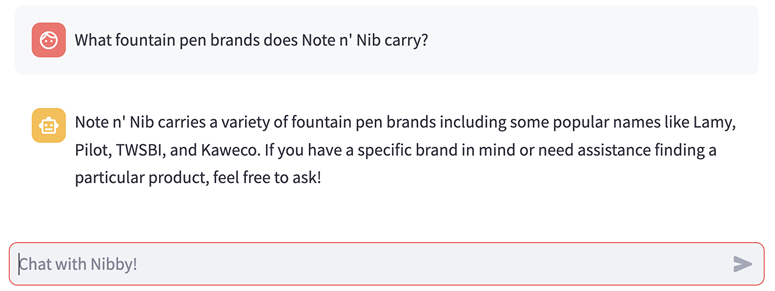
A customer asks Nibby which fountain pens a stationery store carries. The bot names fictional brands such as InkStream and RoyalQuill, despite receiving no information about those products. The confident answer is a hallucination, not evidence that the products exist. section 10.5
Figure 10.14 Nibby makes up information when it doesn’t know the answer.
Use the example conversation to inspect how an AI assistant fills an information gap with invented product details. section 10.5




























