JSON can keep related information together in a document: a customer profile, for example, can include nested address and order details. An application can retrieve that bundle in one database operation instead of joining separate tables. section 8.2.2
A supply-chain message
In a supply-chain exercise, players pass order quantities on slips of paper, standing in for microservices sending JSON payloads via HTTP. The message carries information between services, while delays show that communication takes time. section 12.8.1
Figure 8.3 Showing how NoSQL Document databases store data. Instead of splitting a customer and their orders across separate tables linked by Foreign Keys, all related information is nested into a single, self-contained document. When the application asks for Alice's profile, the database returns her orders at the exact same time; no expensive "Joins" required!
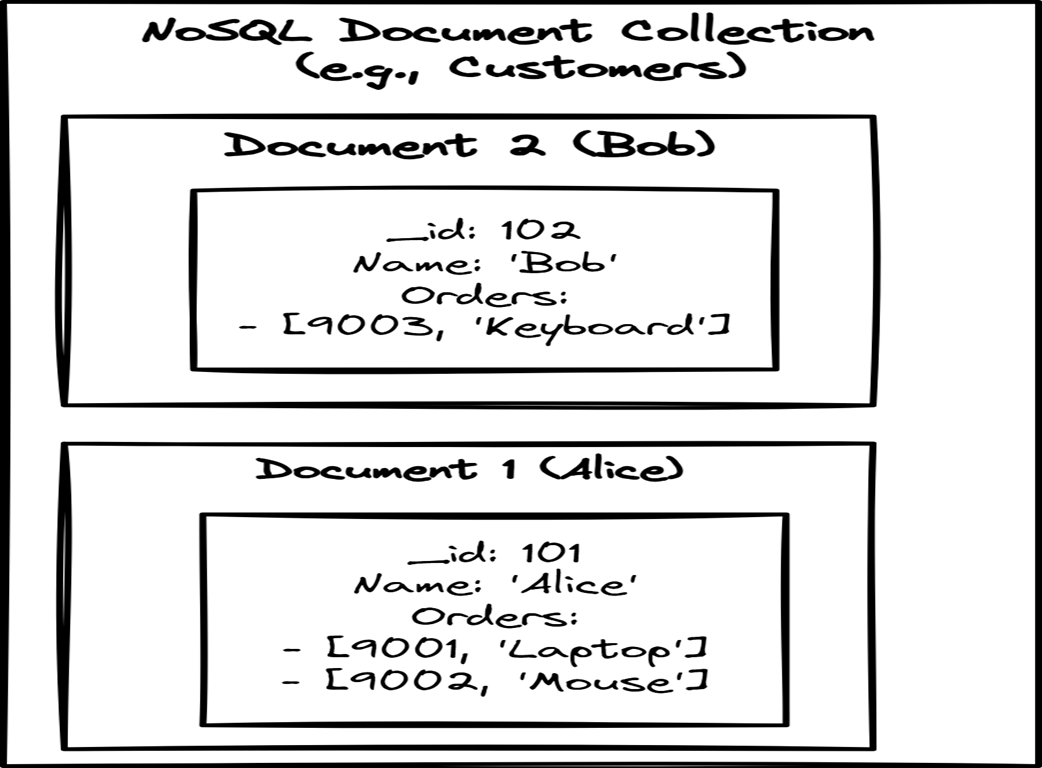
See how customer details and orders can be nested into one self-contained document. section 8.2.2