Kubernetes is an open-source orchestration and automation platform that manages infrastructure and application workloads through a container abstraction layer. It provides the compute engine for applications running in a cluster and can underpin multi-cloud platforms such as Anthos. section 1.2 section 3.1
Using Kubernetes effectively requires more than automated cluster creation. Administrators need to understand component interactions for troubleshooting, while developers need basic operations and the resources used to deploy workloads. section 3.0 section 3.1
Deployment decisions depend on understanding:
- Cluster components and their interactions, including how workloads are deployed and managed. section 3.0
- Kubernetes resources, also called objects, which provide the basic mechanisms for deploying applications. section 3.0
- Scheduling controls such as labels, selectors, tolerations, and affinity or anti-affinity rules. section 3.0
- The trade-off between simplified vendor installation and the operational knowledge needed to diagnose poor architectural choices. section 3.1
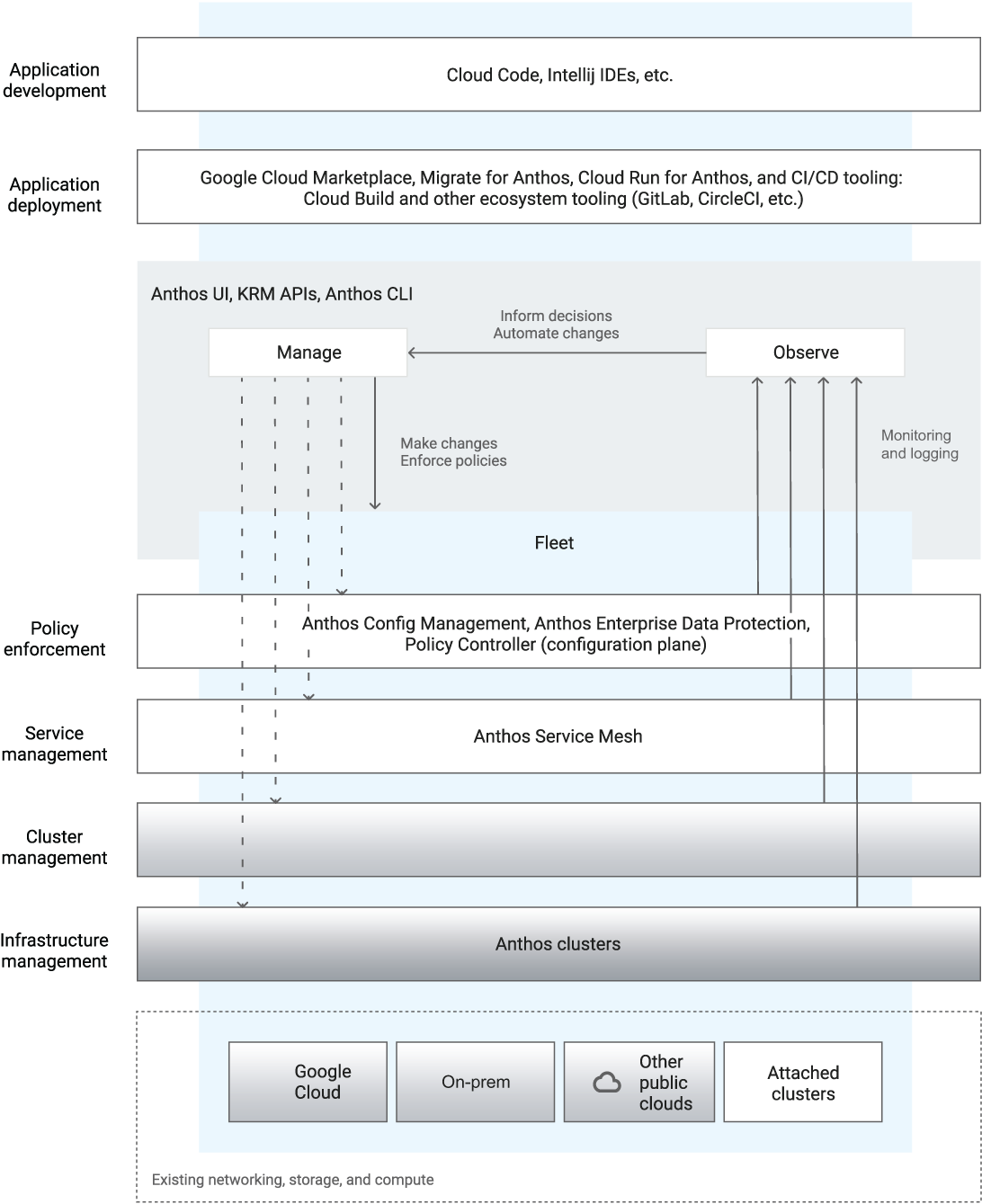
Use the architecture figure to relate Kubernetes to service management, policy automation, multi-cloud abstraction, and developer tooling in Anthos. section 1.2





















