An MCP client connects an AI application to an MCP server and forwards requests to execute tools hosted there. In an LLM application, the host creates clients to access tools from external systems. section 5.1.3 section 5.5
A typical integration involves:
- Establish a connection to an MCP server; the described architecture calls this connection a session. section 5.1.3
- Discover server tools with MCPToolProvider.get_tools(); MCPTool represents an available server tool on the client side. section 5.5
- Forward tool-call requests to the server, where the corresponding tool definitions execute. section 5.1.3
- Connect to local servers over stdio or remote servers over streamable HTTP. section 5.1.3
Figure 5.4 The MCP architecture integrated into LLM agents and our framework
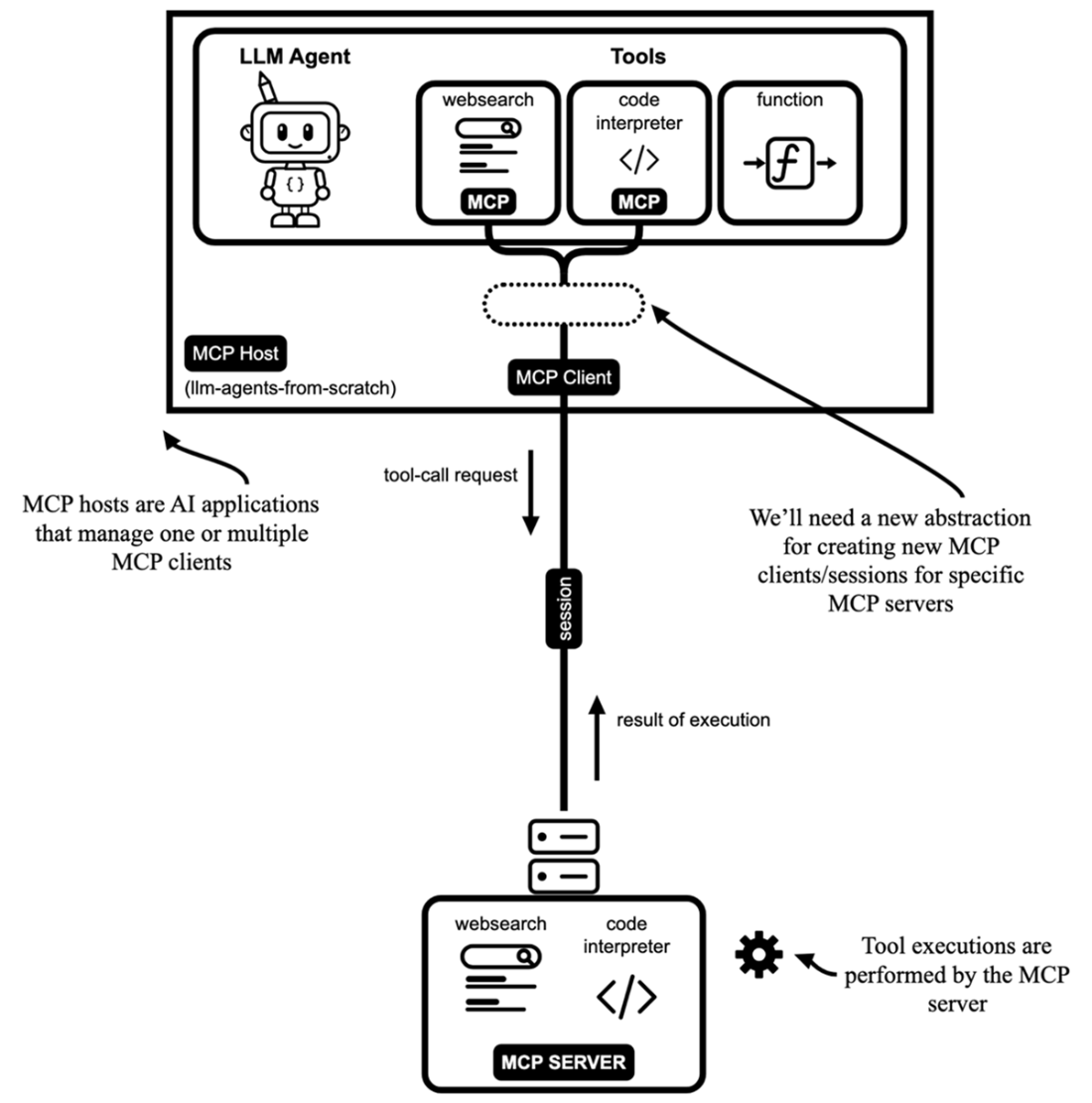
Use the architecture diagram to follow how MCP clients connect agent applications to server-hosted tools. section 5.1.3
Figure 5.5 An LLM agent with tools coming from the two different types of MCP servers: stdio and streamable HTTP.
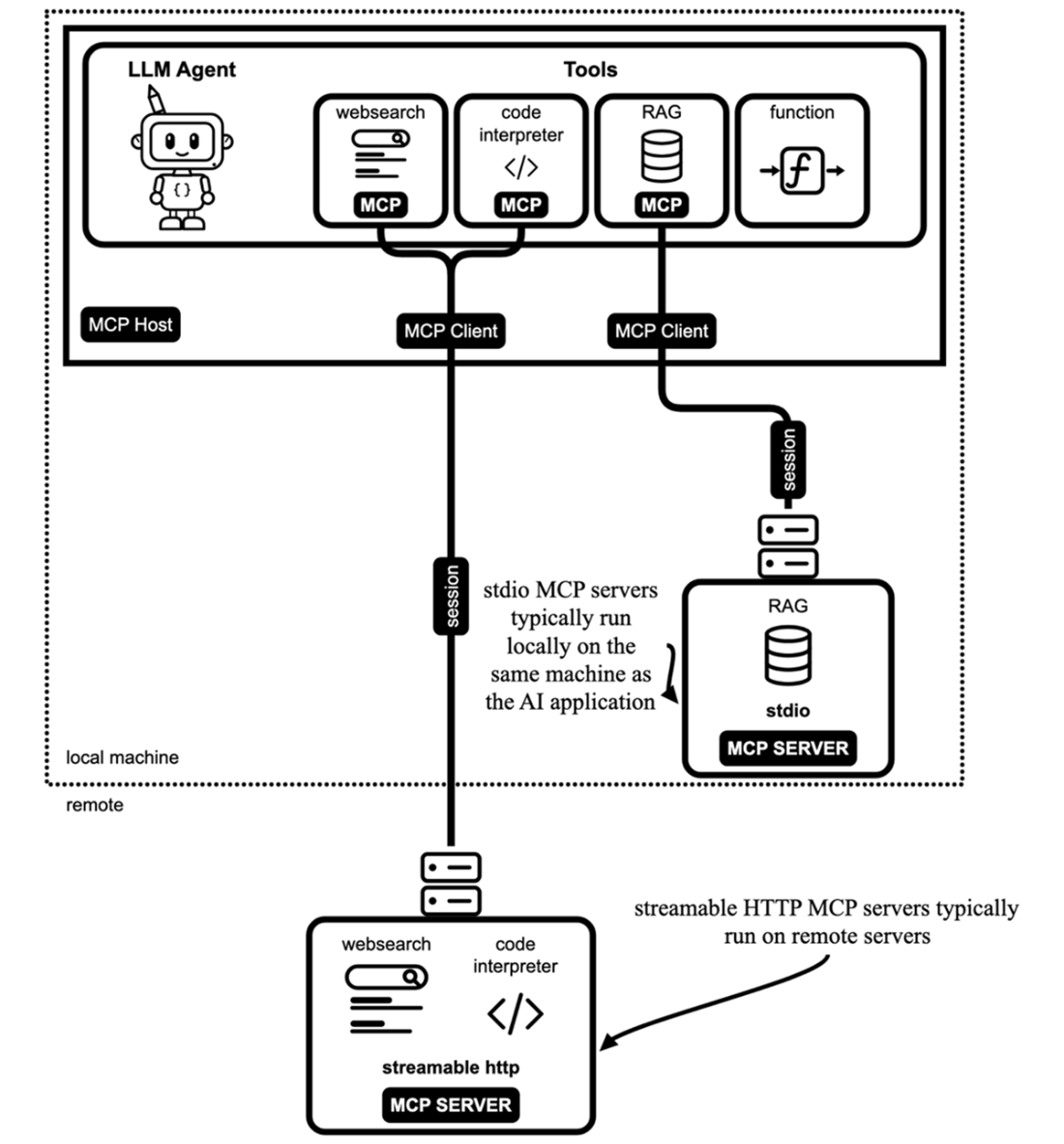
Compare the two supported transport types for servers supplying tools to an LLM agent. section 5.1.3