Accountability assigns responsibility for cybersecurity decisions, tasks, assets, and outcomes, making ownership visible and measurable. section 5.4.2 section 6.2.2
Make accountability practical by measuring:
- Board action items closed within the target quarter. section 5.4.2
- Roles with clearly defined cybersecurity responsibilities. section 5.4.2
- Hardware and software assets assigned an accountable owner. section 6.2.2
- Critical assets classified, monitored, patched, and reviewed through regular audits. section 6.2.2
Turning unclear ownership into measurable control
TechSecure Solutions used a roles and responsibilities dashboard after cybersecurity incidents exposed unclear ownership. Its targets included closing 100% of board action items within a quarter and defining cybersecurity responsibilities for every role. TechMed Solutions applied the same accountability principle to hardware and software: it audited its inventory, introduced automated asset tracking, classified assets by criticality, and aimed to eliminate unaccounted assets. section 5.4.2 section 6.2.2
Figure 5.7 The left side shows TechSecure Solutions’ roles and responsibilities dashboard before clearly defining roles and responsibilities to increase accountability. The right side shows the roles and responsibilities dashboard after clearly defining roles and responsibilities to increase accountability.
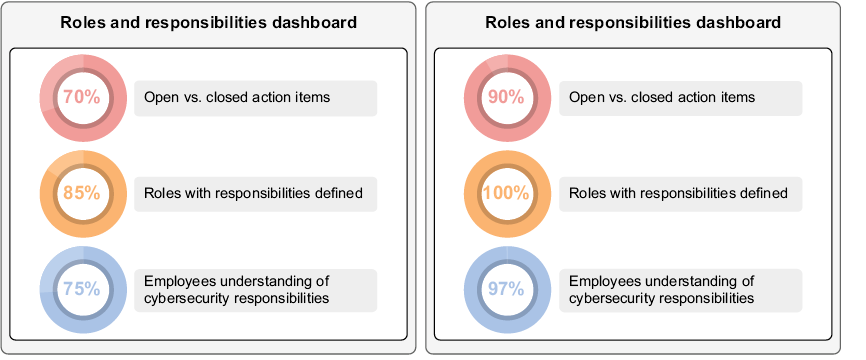
Compare dashboard states before and after clearly defining roles and responsibilities to see how ownership becomes visible. section 5.4.2
Figure 6.2 The left side shows TechMed Solutions’ asset management dashboard before managing hardware and software assets. The right side shows the dashboard after implementing hardware and software asset management.
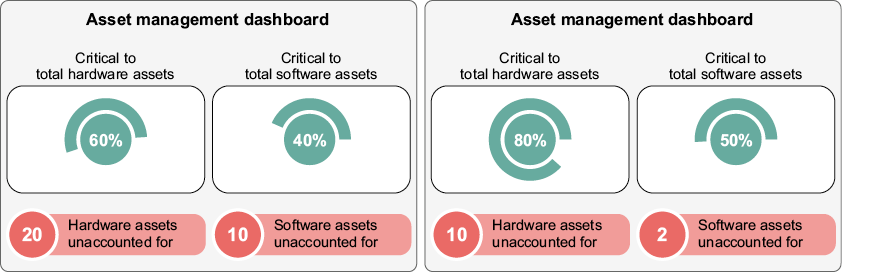
Compare dashboard states before and after asset management to connect ownership with inventory, criticality, and operational protection. section 6.2.2











