Accountability makes responsibility for data practices a shared organizational obligation rather than a task assigned to one department. Leadership, marketing, IT, and other teams should understand and own how they collect, store, and use data. Clear documentation and cross-department training help teams explain their systems, reduce compliance missteps, and protect trust. section 2.2
Practical accountability connects everyday data decisions with customer expectations and applicable requirements:
- Assign ownership across teams for data collection, storage, use, and systems that support personalization or other decisions. section 2.2
- Document systems and data sources clearly enough for relevant teams to explain how information supports business activities. section 2.2
- Embed accountability in purposeful, limited data collection that aligns with customer expectations, business goals, and legal requirements. section 2.2.2
- Treat ethics as complementary to compliance: responsible practices build trust, but ethical intent does not replace legal obligations. section 2.2.2
Personalized offers
When AI powers personalized offers, marketing and product teams should be able to explain which data fuels the algorithms. Documentation and training turn that expectation into shared accountability. section 2.2
Figure 2.1 Core elements of user privacy
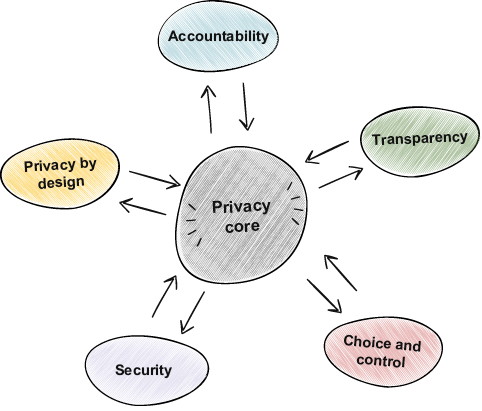
Use the core-elements diagram to see accountability alongside transparency, choice and control, and the broader privacy core. section 2.2











