Accountability means taking responsibility for work, decisions, and outcomes. In management, it combines clear expectations, candid communication, ownership, feedback, and progress evaluation. section 3.1 section 3.5
Build accountability through practical management habits:
- Define goals, responsibilities, deliverables, and expectations so people know what they own. section 3.0 section 9.2.2
- Communicate decisions transparently, explain the reasoning, and commit to implementation. section 3.2.6
- Track progress and evaluate success, using feedback to address gaps and support improvement. section 3.5 section 4.1
- Lead by example while maintaining trust, morale, and candid communication. section 3.5 section 13.3.1
When a decision produces problems
A manager assigns a senior engineer to a high-visibility project after priorities change. When missed milestones and defensiveness emerge, the manager shares feedback privately, listens to the engineer’s difficulties, and provides practical coaching. Accountability means owning the assignment and responding constructively when its consequences differ from expectations. section 3.2.6
Figure 9.2 A sample RACI matrix
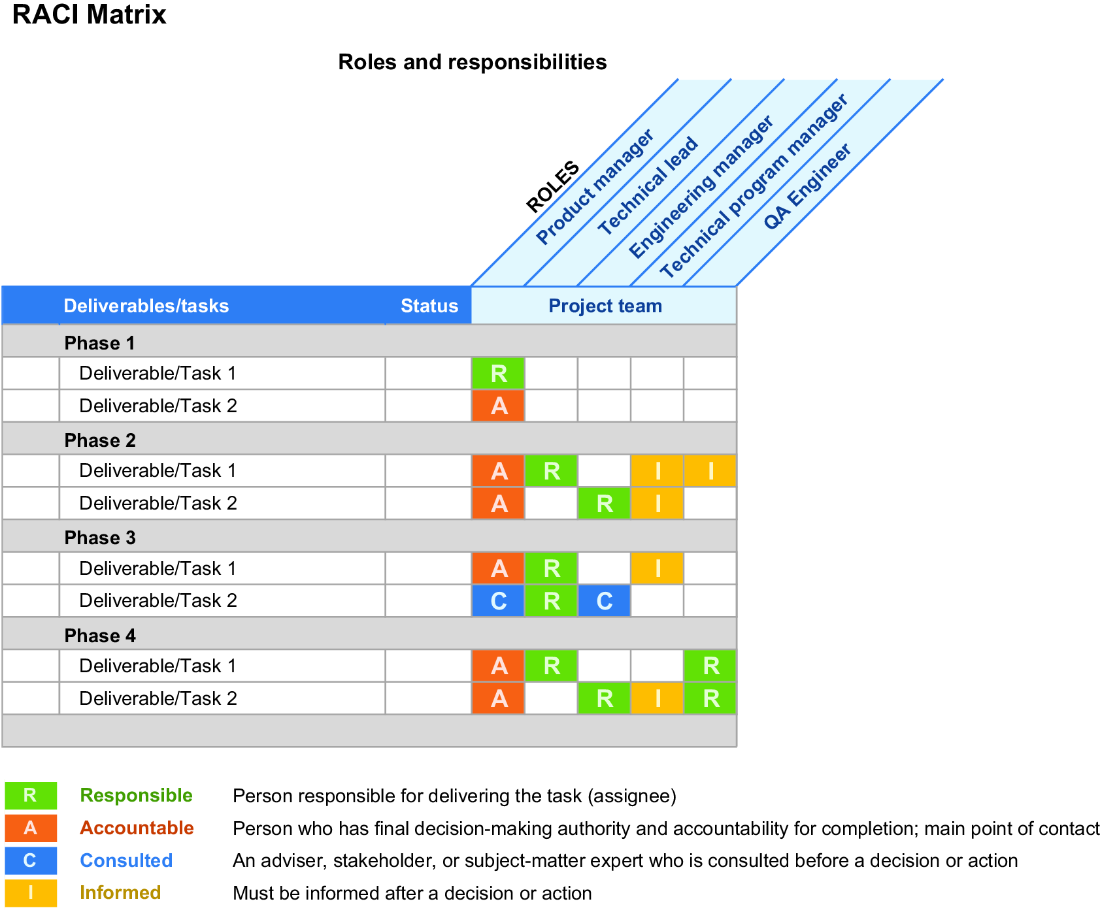
A RACI matrix makes accountability visible by assigning roles, ownership, involvement, and deliverables across a cross-functional project. section 9.2.2
Accountability is strongest when responsibility is explicit, decisions are explained, progress is visible, and mistakes become opportunities for learning rather than blame. section 3.5 section 12.2.1











