ChatGPT is a text-to-text generative AI tool: it produces text from prompts and can sustain a conversational exchange. In data storytelling, it helps turn a chart’s subject into language that gives audiences context, direction, or possible next steps. It supports creative and analytical work, but it does not replace human creativity, reasoning, or judgment. section 1.2 section 4.6
Use it where a data story needs words rather than more marks: titles that invite action, short subtitles that establish context, commentaries, annotations, and candidate recommendations. Match the request to the intended reader, such as the general public, professionals, executives, or decision makers. section 4.5.3 section 7.3
Build a prompt around a clear communicative goal:
- Set a role, such as entertainer, educator, informer, inspirer, inviter to action, or relationship builder. section 7.3
- Name the audience and topic, then specify the text type or task, such as five titles, an annotation, or a commentary. section 7.3
- Iterate when the response misses the goal: adjust prompt elements and generate again until the text converges on a useful result. section 7.3
- For idea generation, describe a scenario, ask a question, and request a number of possible answers; then discuss promising answers further. section 9.1.2
From a long description to a subtitle
To create context for a homelessness visualization, begin by asking for a general description. Ask for a summary, ask for a more engaging version for the audience, and shorten it again if needed. This progression moves from a long passage toward a concise subtitle; generate several candidates and select one that fits the story. section 5.4.1
Figure 7.4 The schema used to generate context
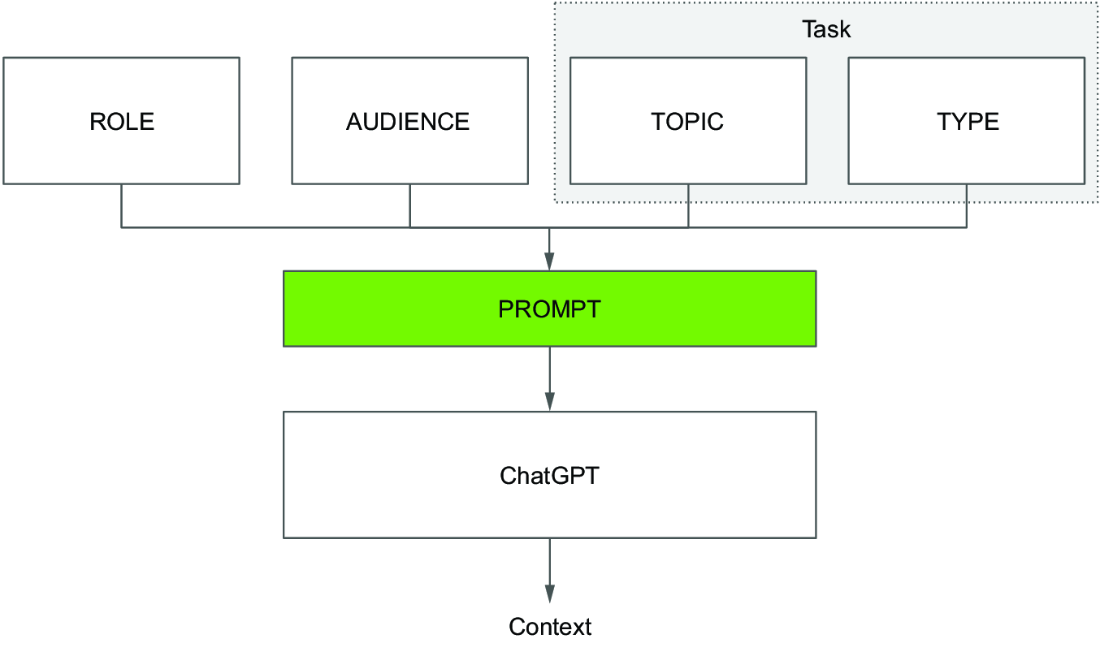
Use the prompt schema as a compact checklist for defining the role, audience, topic, and text type before requesting chart context. section 7.3
ChatGPT can also act as a thinking assistant rather than only a content generator. Ask for options, priorities, or strategies, then use the conversation to deepen an answer. Treat proposals as a starting point for investigation: generated information can be wrong or biased, and feasibility needs verification with additional evidence. section 9.1.2 section 9.2.3



















