Model training fits a model by exposing it to large collections of data, helping it learn patterns that support predictions or generated outputs. It creates the impression of intelligence without making the system humanly intelligent or self-aware. section 1.1
A typical generative training process looks like this:
- Gather large collections of text, images, audio, or video. section 1.1 section 4.1
- Analyze examples to discover patterns, relationships, styles, and structures. section 1.1 section 4.1
- Represent the material numerically so the system can work with those patterns. section 4.1
- Generate candidate outputs, compare them with examples or preferences, and adjust the model repeatedly. section 1.1 section 4.1
Training a writing style
Feed GPT as much of your writing as possible through llama_index, then ask it to answer questions or scenarios in your style. The result can be useful, but still deserves verification rather than a ceremonial trust fall. section 3.8
Figure 4.1 The training process for building a media-generation LLM
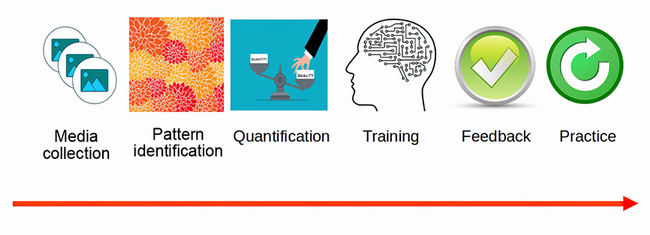
Use the training-process figure to follow how media examples become a model capable of generating audio, images, or video. section 4.1























