liveBook · Manning

Accountability

As explained in Fundamentals of Cybersecurity

Accountability is the ability to trace access and actions in an information system to responsible identities through recorded evidence.

Accountability in access control means being able to trace who accessed a resource, when they accessed it, and what they did—including granting permissions to others. Logging, monitoring, and auditing create the records that support this traceability. section 8.3.4

Accountability follows identification, authentication, and authorization: after access is granted, activities are recorded so that permitted access can still be scrutinized. These records help organizations identify inappropriate or unauthorized use and detect and respond to security incidents. section 8.3 section 8.3.4

Figure 8.2 Illustration of the phases of access control
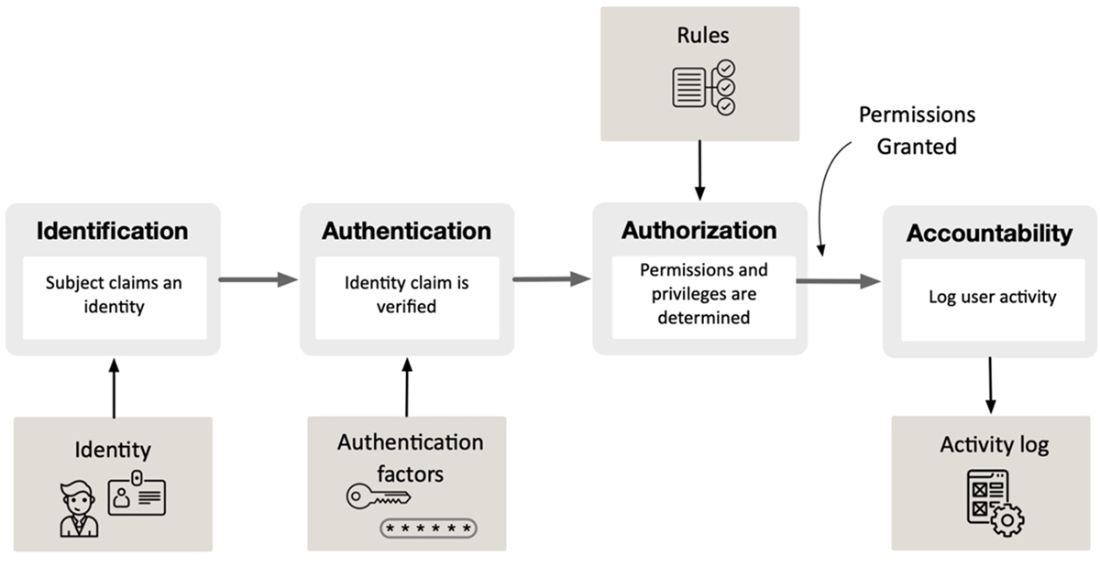
View accountability as the monitoring phase in the access-control sequence. section 8.3


How Fundamentals of Cybersecurity covers it

How deep it goes
Explains what activity records capture and how logging, monitoring, and auditing support incident detection and response.
Examples
Uses recorded access events, including permission grants, to illustrate traceable activity.
What it assumes
Builds on identification, authentication, and authorization as earlier steps in the access-control process.
What you can do after
Understand how activity records help trace access and identify inappropriate or unauthorized use.
How it connects
Connects access control with identification, authentication, authorization, logging, monitoring, auditing, and identity and access management.

Also explained in

Compare how 17 books explain accountability →

Related concepts

This explainer was generated by Manning's knowledge graph from the text of Fundamentals of Cybersecurity. The section links point to the parts of the book it draws on.














