liveBook · Manning

Parallelism

As explained in Event Processing in Action

The execution of separate parts of a computation simultaneously across multiple processing units.

Parallelism runs separate parts of a computation simultaneously. In an event-processing network (EPN), independent event-processing agents (EPAs) can be assigned to run concurrently. section 10.4.1

Parallel processing can occur at three levels:

  • Within a single core, using multithreading. section 10.4.1
  • Across cores in one multicore machine, with threads sharing memory. section 10.4.1
  • Across multiple machines in a cluster, by partitioning the work. section 10.4.1

Event streams can also be distributed across computing nodes so separate parts of an analysis run in parallel. Grouping activities for execution involves trade-offs such as available processors, distribution, communication overhead, and performance goals; systems usually automate these decisions. section 1.2.3 section 10.4.1
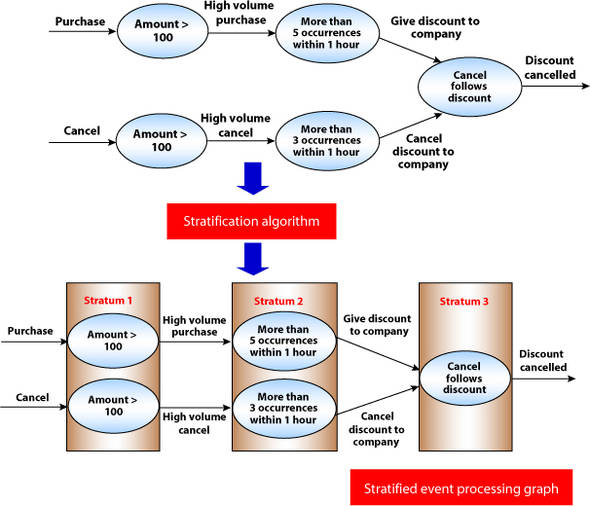
Figure 10.7. Stratification of an EPN to three strata

The diagram shows an EPN divided into three strata, illustrating how stratification identifies independent EPAs that can run in parallel. section 10.4.1


How Event Processing in Action covers it

How deep it goes
Distinguishes three execution levels and identifies assignment trade-offs, but leaves complex decisions to system optimizers.
Examples
Uses stratified networks of independent agents and event-stream analysis distributed across computing nodes.
What you can do after
Understand concurrency levels and the factors an optimizer considers when grouping activities.
How it connects
Connects event-processing agents, partitioning, shared memory, distributed processing, and performance optimization.

Also explained in

Compare how 42 books explain parallelism →

Related concepts

This explainer was generated by Manning's knowledge graph from the text of Event Processing in Action. The section links point to the parts of the book it draws on.