Parallelism means executing multiple tasks at the same time using multiple physical or computational resources. It differs from concurrency: concurrency structures independent tasks so they can make overlapping progress, while parallelism runs tasks simultaneously. section 1.3.1
Coffee shop analogy
One cashier switching between several orders illustrates concurrency; several cashiers serving different customers simultaneously illustrate parallelism. On a GPU, many lightweight threads can execute independent work at once, provided the work is structured into independent tasks. section 1.3.1 section 1.5
Figure 1.4 In concurrency, a single worker (thread or core) switches between multiple tasks, giving the illusion of simultaneous progress. In parallelism, multiple workers execute separate tasks at the same instant.
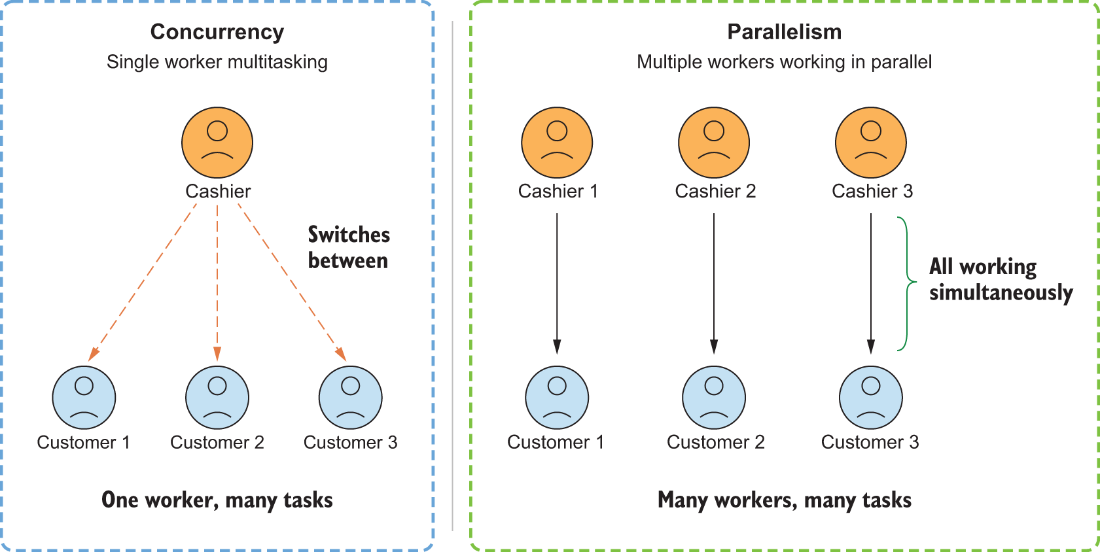
Compare one worker switching among tasks with multiple workers executing separate tasks simultaneously. section 1.3.1