liveBook · Manning

Deployment pipeline

As explained in Delivering Machine Learning Projects: From design to deployment

CI/CD is the practice of automating continuous integration, testing, and delivery or deployment of software changes.

A deployment pipeline automates the movement of system artifacts into production and verifies the transfer with post-release tests. Avoid relying on informal instructions for a stressful release. section 9.8

Make the release an explicit, repeatable operation:

  • Automate promotion of all required files to production. section 9.8
  • Plan and automate post-release tests, then run them and verify the results. section 9.8
  • Prepare authorized key people to intervene if deployment goes wrong. section 9.8

Release tooling

A release may be started by clicking a button or issuing a command-line instruction; Jenkins is one example of a standard pipeline tool. section 9.8

Figure 1.3 A generic DevOps production and delivery process (modeled after Ebert, 2016; redrawn and amended by the author)
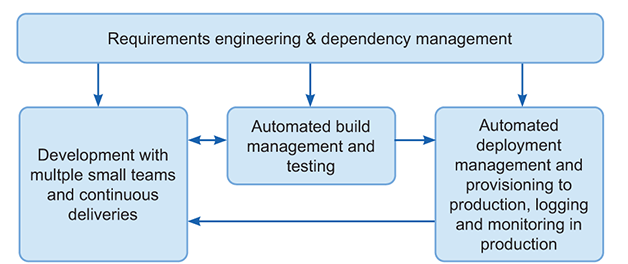
View the generic DevOps production and delivery process as context for deployment automation. section 1.3


How Delivering Machine Learning Projects: From design to deployment covers it

How deep it goes
Details artifact transfer, test planning and execution, and contingency readiness, but not pipeline configuration.
Examples
Uses Jenkins, button- or command-triggered releases, and automated post-release tests as examples.
What you can do after
Operate/configure it by automating artifact promotion, planning release tests, and preparing responders for deployment failures.
How it connects
Links pipelines with MLOps, version control, data transformation, testing, and model deployment.

Also explained in

Compare how 30 books explain deployment pipeline →

Related concepts

This explainer was generated by Manning's knowledge graph from the text of Delivering Machine Learning Projects: From design to deployment. The section links point to the parts of the book it draws on.



























