SQL is framed as a strict-order data option beside NoSQL and vector databases. The decision is not a feud to win: weigh each database against the job and its tradeoffs. section 8.0 section 8.2
Abstractions such as Entity Framework and Prisma can hide the SQL they generate. When a complex query times out, a deadlock occurs, or results are wrong, understanding raw SQL helps you investigate. Know the fundamentals of indexes, joins, and execution plans; relying entirely on the abstraction leaves you with little to steer by. section 6.8.3
Match the database choice to the data and workload:
- A financial ledger is treated as a poor fit for a NoSQL document store because it needs strict ACID transactions. section 8.8.2
- Session data kept in SQL is presented as a source of CPU strain. section 8.8.2
- A product catalog with highly variable structures and many more reads than writes prompts a database-fit decision. section 8.8.3
Figure 8.1 The Database Landscape: You must choose between Strict Order (SQL), Massive Scale (NoSQL), or Semantic Meaning (Vector).
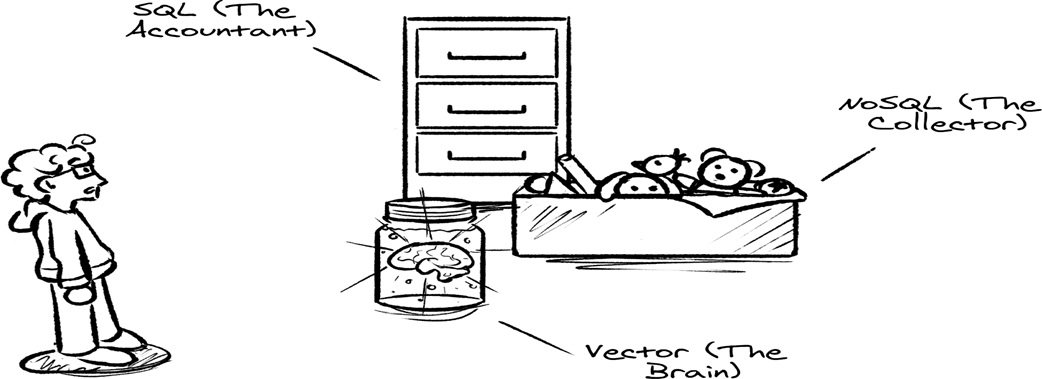
Use the landscape figure to compare SQL's strict-order role with NoSQL's massive-scale role and vector databases' semantic-meaning role. section 8.2