A classifier assigns an example to one or more predefined categories using its features. It finds patterns that group examples into labels rather than predicting an exact number. section 1.10 section 8.14
Classification is useful when the answer is discrete, such as car or truck, bird or not bird, or tablet, laptop, or phone. Regression instead estimates a continuous value such as price or fuel consumption. section 8.15 section 8.3
Classifying vehicles
Measure each vehicle's weight and number of wheels. Because cars usually have four wheels while many trucks have more and tend to weigh more, these features can help predict whether a new vehicle is a car or a truck. The same reasoning can classify motorcycles, sedans, and sport-utility vehicles from physical dimensions, engine size, and seat count. section 8.15 section 1.10
Useful checks when identifying a classification problem:
- Ask whether the desired output is a label or category rather than a numerical quantity. section 1.10
- Identify the example's features, such as weight, wheels, wings, screen size, or operating system. section 8.15
- Distinguish binary classification, such as cat versus dog, from problems with several possible classes. section 9.10
Figure 8.16 Example vehicles for potential classification based on the number of wheels and weight
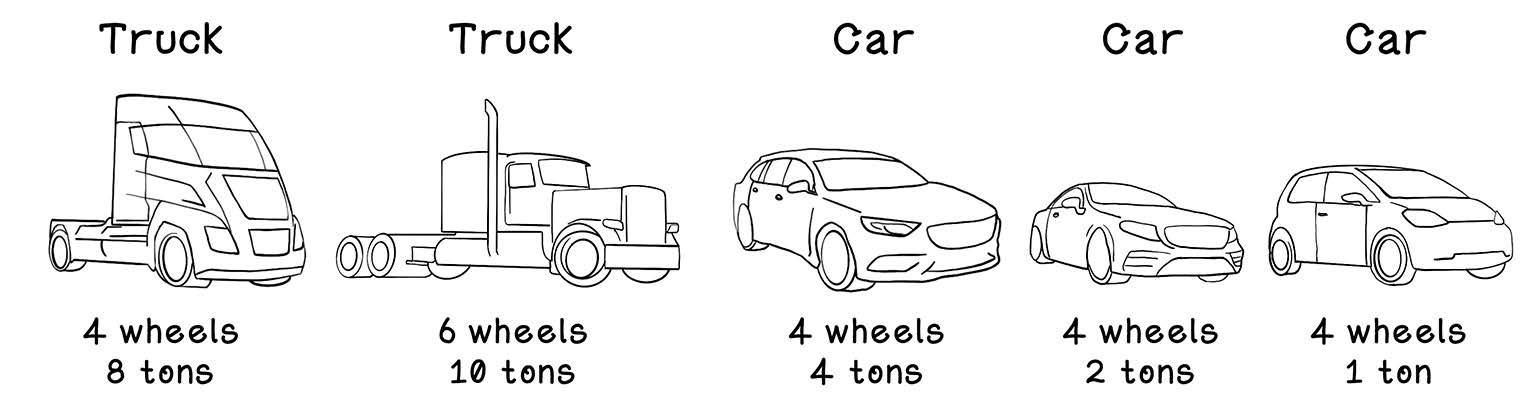
A vehicle plot makes the classification intuition visible by relating weight and number of wheels to likely categories. section 8.15






























