An application programming interface (API) is a defined interface through which software exposes functionality or data to other software. APIs can expose language models through platforms while abstracting the infrastructure needed to run them. section 8.1.2
This abstraction lets organizations integrate models trained elsewhere without building the underlying systems. It also creates dependency: model behavior, availability, pricing, and acceptable use can be governed externally, and platform changes can affect systems built on top of them. section 4.7.3
Multiple access channels
Models from OpenAI and Anthropic can be accessed directly from their developers or through major cloud platforms such as Microsoft Azure and Amazon Web Services. The same model may therefore be available through more than one channel. section 8.1.2
An alternative is to deploy an open-weight model locally. This can offer greater flexibility and control, but shifts responsibility for infrastructure and optimization to its users. Open-weight does not necessarily mean that the training data, code, license terms, or full development process are open. section 8.1.2
Figure 8.1 The large language model ecosystem. Models are built on a layered system that begins with specialized hardware and extends through cloud infrastructure and model providers. Interaction with this system occurs primarily through the two bottom layers, where users either consume models via managed services that abstract the underlying complexity or deploy open-weight models on self-managed infrastructure, taking on greater control and responsibility.
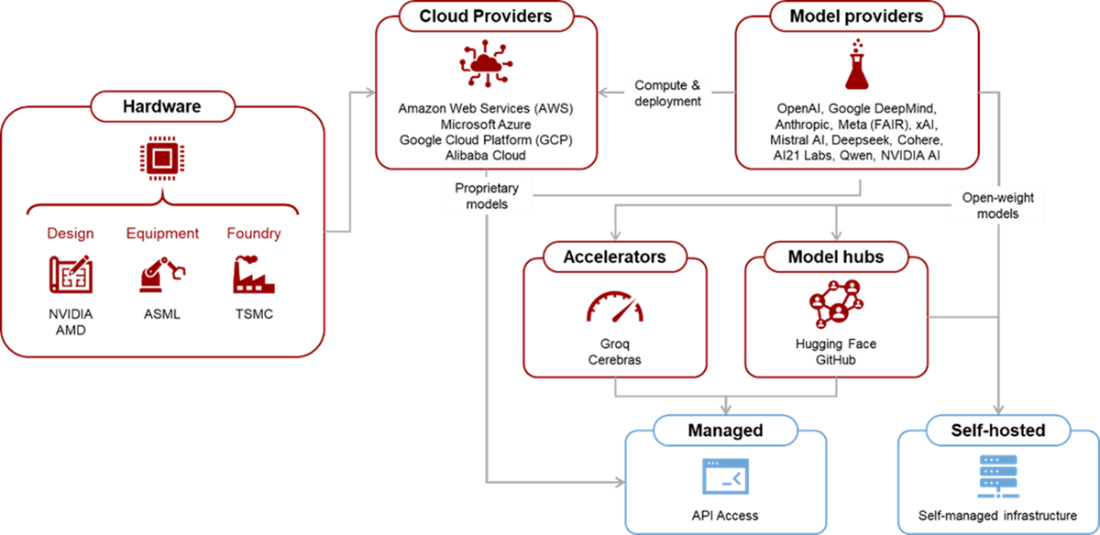
Compare managed model access with self-managed deployment across the layers of the language model ecosystem. section 8.1.2

























































