A parameter is a value learned from training data that determines a machine-learning model’s behavior. In neural networks, parameters are commonly weights and bias terms adjusted during training. section 4.1.2 section 3.1
Counting parameters
A four-input logistic regression model has five parameters: one weight per input plus a bias term. Adding a hidden layer with 25 units creates 4 × 25 additional connections, increasing the total to more than 100. section 4.1.2
Model size can grow from a few parameters to millions, billions, or trillions in deep neural networks. Training larger parameter sets requires substantial computation and generally benefits from larger volumes of training data. section 4.1.2
Distinguish parameters from related model settings:
- Parameters are learned from data during training. section 3.1
- Hyperparameters are supplied by the developer, including learning rate, maximum tree depth, and class weights. section 3.1
- Gradient descent updates parameters during model training. section 4.1.2
Figure 4.7 Logistic regression model expressed here as a neural network. Notice the resemblance with figure 4.3.
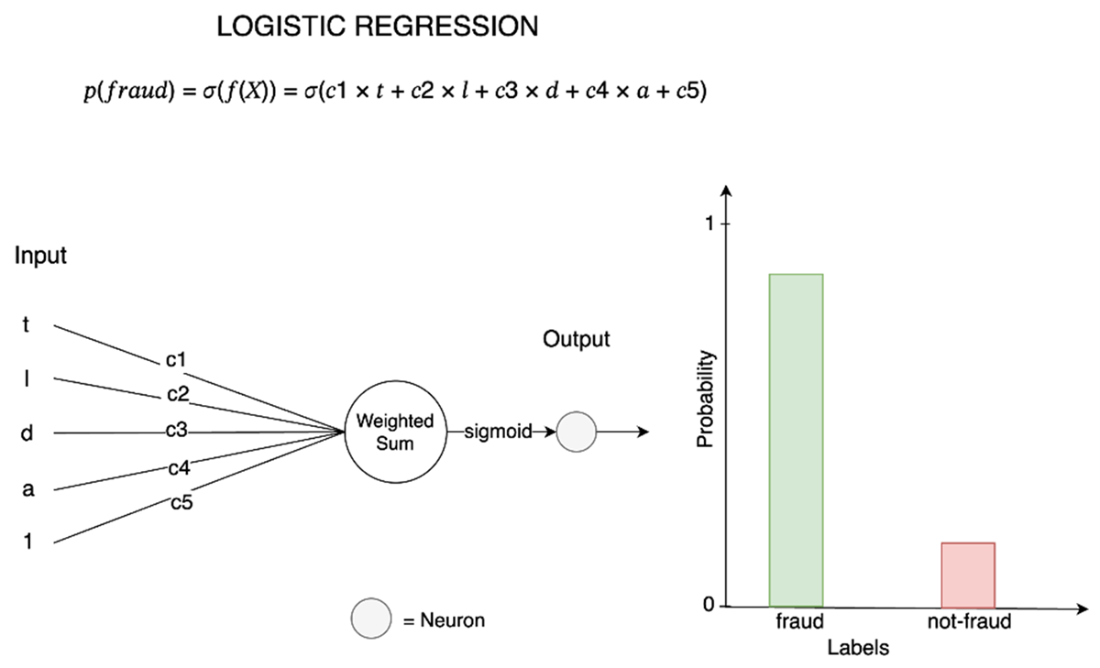
Compare logistic regression’s weighted-sum structure with its equivalent single-layer neural-network representation. section 4.1.2








































