liveBook · Manning

MCP server

As explained in Build a Multi-Agent System (from Scratch)

An MCP server is a program that exposes tools or contextual resources to clients through the Model Context Protocol.

An MCP server is the external system that supplies MCP tools to an AI application. An MCP client sends tool-call requests to server-side tool definitions for execution; one server can provide multiple tools. section 5.1.3

The 2026-07-28 MCP revision, commonly called MCP 2.0, removes protocol sessions in favor of self-contained requests. The mcp Python library 2.0 still represents connections through client sessions. section 5.1.3

Figure 5.4 The MCP architecture integrated into LLM agents and our framework
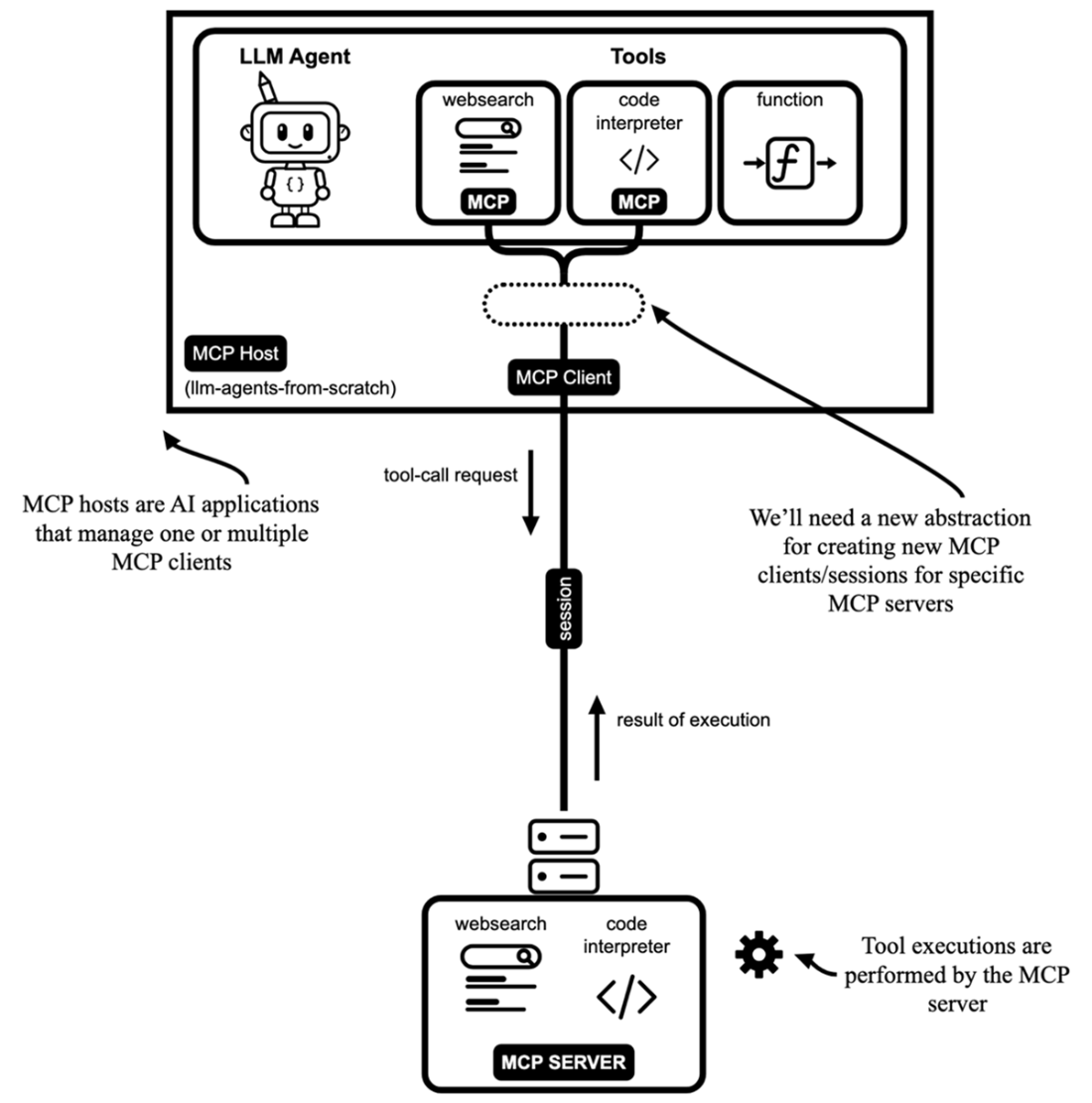
Shows how MCP servers, clients, and tools fit into an LLM agent framework. section 5.1.3

Figure 5.5 An LLM agent with tools coming from the two different types of MCP servers: stdio and streamable HTTP.
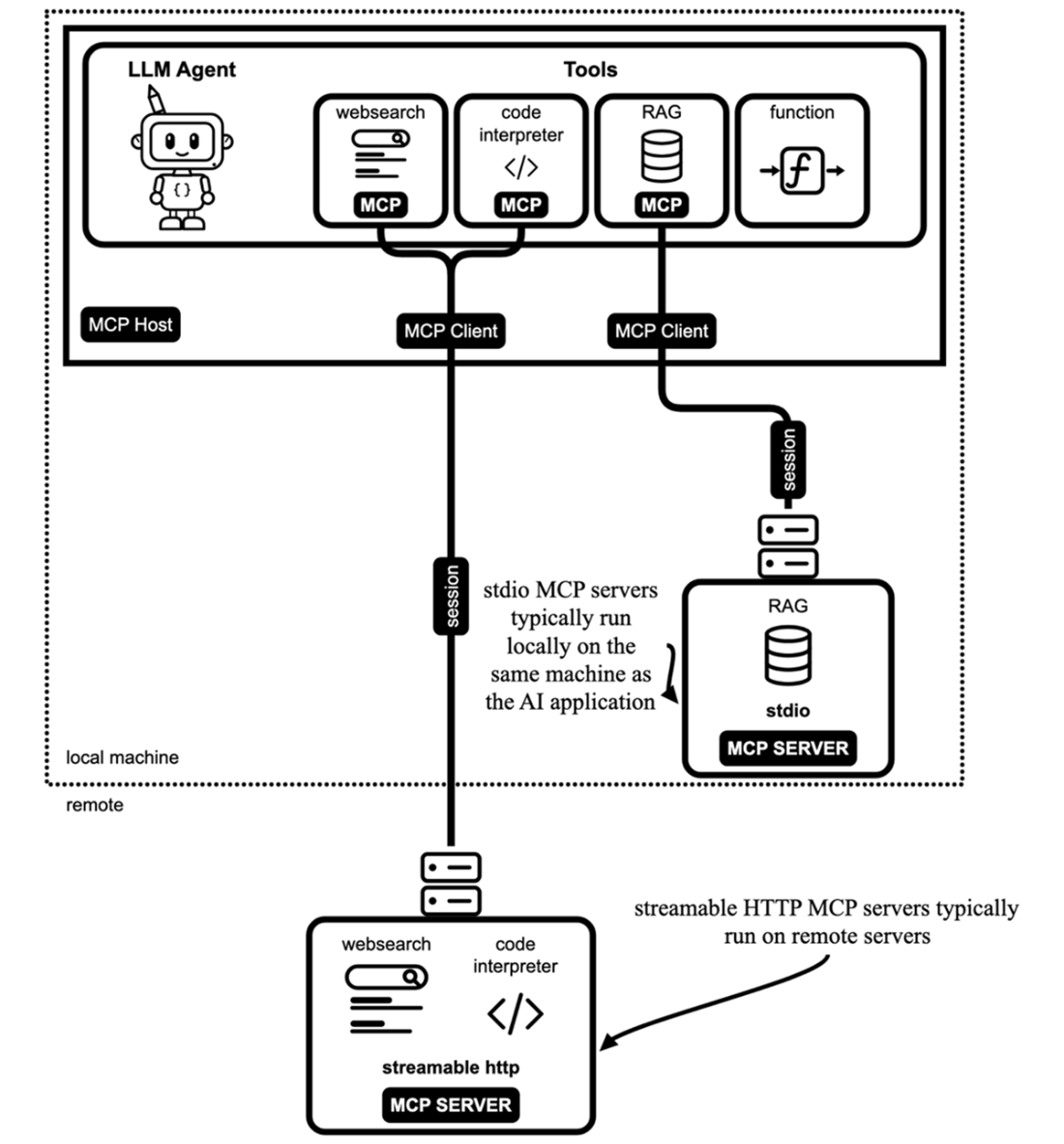
Compares the local stdio and remote streamable-HTTP server setups. section 5.1.3

How Build a Multi-Agent System (from Scratch) covers it

How deep it goes
Defines server and client roles, tool execution, sessions, and transports; points toward connection management without detailing its implementation.
Examples
Contrasts local stdio servers with remote streamable-HTTP servers and shows multiple tools supplied by one server.
What it assumes
Assumes familiarity with LLM agents, tools, clients, and server architecture before integrating MCP.
What you can do after
Apply MCP by connecting an LLM agent to local or remote servers and using their tools.
How it connects
Connects MCP clients, MCP tools, LLM agents, and MCP hosts through the Model Context Protocol.

Also explained in

Compare how 18 books explain MCP server →

Related concepts

This explainer was generated by Manning's knowledge graph from the text of Build a Multi-Agent System (from Scratch). The section links point to the parts of the book it draws on.