A Model Context Protocol (MCP) is a standardized interface that lets AI agents connect to external data sources and retrieve information in a consistent format. It functions like an API designed explicitly for large language models. section 9.1.2
MCPs provide an alternative to other agent data-access patterns:
- RAG databases aggregate and index external data, but require ingestion jobs and ongoing maintenance. section 9.1.2
- Web searches expose a standardized search interface to agents. section 9.1.2
- MCPs let an LLM query data directly during response generation, reducing the need for custom aggregation jobs as more MCPs become available. section 9.1.2
Current share price
An AI agent can use an MCP to query the latest share price while generating an answer, rather than relying only on previously collected data. section 9.1.2
Figure 9.1 A reference workflow for an AI agent
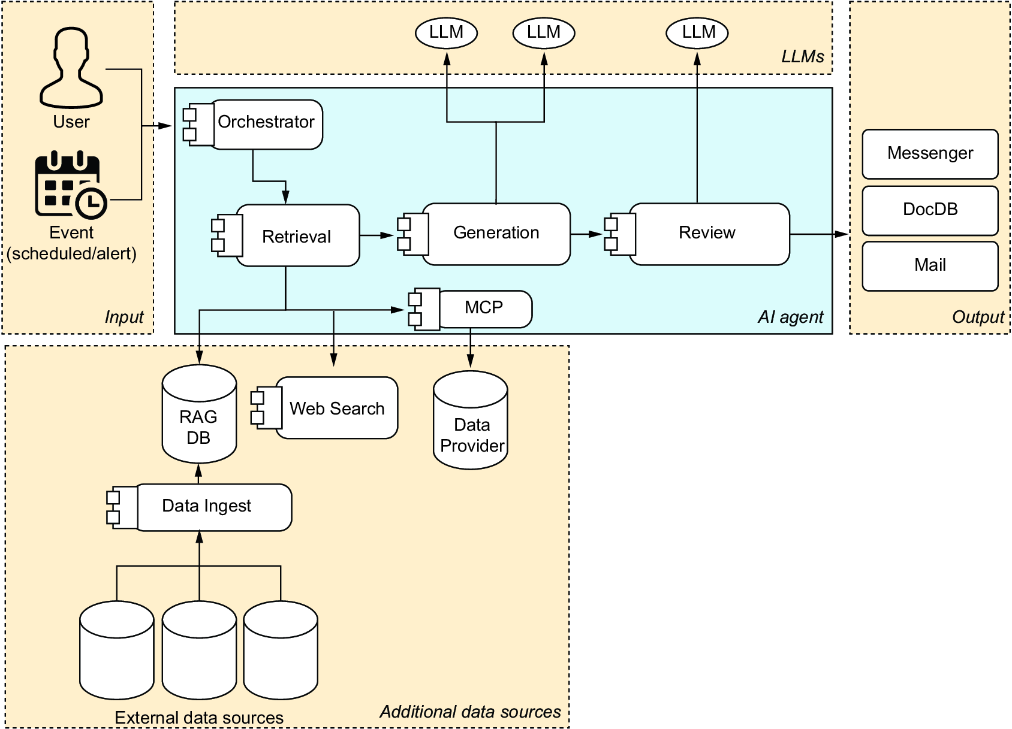
Use the reference workflow to place MCP-based retrieval between an agent’s task and its response-generation process. section 9.1.2













