liveBook · Manning

Database

As explained in Building Web APIs with ASP.NET Core

A database is an organized repository that stores structured data for retrieval and modification.

A database is an organized repository for structured data. A database management system (DBMS) creates and manages that data, supporting efficient access, categorization, normalization, transactions, and security. section 4.1

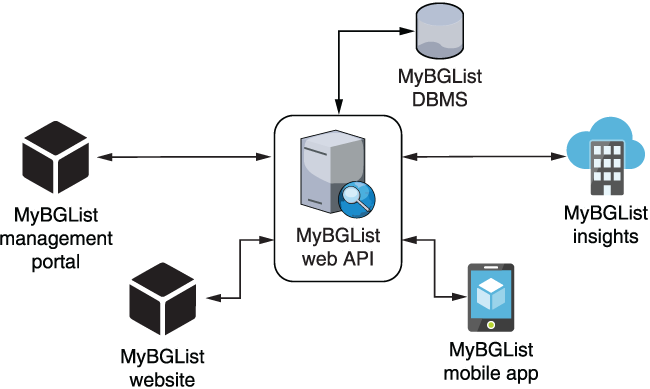
In the board-game API, the database stores names, publication years, player ranges, play times, minimum ages, complexity, mechanics, ratings, and related information. The web API mediates access so websites, mobile apps, management tools, and analysis services do not connect directly to the database server. section 1.1.2

A practical database setup includes:

  • Create the MyBGList database in SQL Server Management Studio using the default core settings. section 4.2.4
  • Add an instance-level login and a database-level user, then assign appropriate role membership for API access. section 4.2.4
  • Repeat the setup for production, keeping production credentials separate from development credentials. section 12.3.6
Figure 1.3 Several board-game-related web applications and services fed by a single MyBGList web API
01-03

Use the architecture diagram to trace how one database serves multiple applications through a web API. section 1.1.2


How Building Web APIs with ASP.NET Core covers it

How deep it goes
Defines DBMS benefits and demonstrates SQL Server creation, credentials, users, and deployment, but defers detailed schema design.
Examples
Uses a board-game catalog, the MyBGList database, SQL Server Management Studio, instance logins, and database users.
What it assumes
Assumes familiarity with the general advantages of DBMSs while establishing the database and access-control workflow concretely.
What you can do after
Operate/configure SQL Server by creating databases, logins, users, roles, and separate development and production credentials.
How it connects
Connects databases with DBMS, web APIs, SQL Server, authentication, authorization, transactions, normalization, and data security.

Also explained in

Compare how 24 books explain database →

Related concepts

This explainer was generated by Manning's knowledge graph from the text of Building Web APIs with ASP.NET Core. The section links point to the parts of the book it draws on.





















