A prompt is the natural-language input sent to a large language model. It supplies instructions, context, constraints, examples, or requested formats that shape a probabilistic response. section 2.3 section 1.3
Useful prompts frame a specific testing or development problem rather than asking for a generic answer. Clear instructions, delimiters, structured output, assumption checks, and few-shot examples make the intended result more explicit. section 2.4.1 section 5.2.1
A practical prompt commonly specifies:
- The role or task, such as analyzing risks in a software feature or reviewing code. section 4.2.1 section 4.2.2
- The input boundary, using delimiters to separate requirements, code, models, or existing test cases from instructions. section 4.2.1 section 5.4
- Constraints for quality characteristics, numbering, word limits, output fields, or response format. section 2.3 section 6.1.1
- A request to break down complex work, check the result, avoid repetition, or compare suggestions with known risks. section 2.4.6 section 5.4
From generic request to targeted testing prompt
“Create tests for a file upload feature” leaves file formats, size limits, access control, progress updates, and auditing under-specified. A stronger prompt supplies those acceptance criteria, requests risks or test cases by quality characteristic, and defines the expected structure. Similarly, a data-generation prompt can request five JSON objects, specify each field’s type and allowed values, and require a count check before output. section 1.2.2 section 6.1.1
A prompt improves the likelihood of a useful response but does not guarantee correctness. LLMs may hallucinate, overfit a long conversation, misunderstand weakly specified requirements, or produce plausible but unsuitable code and data. Human judgment remains necessary to choose relevant suggestions, verify outputs, and decide what to test. section 2.7 section 5.5
Figure 5.5 Area of effect model showing the skills required to get valuable outputs from an LLM
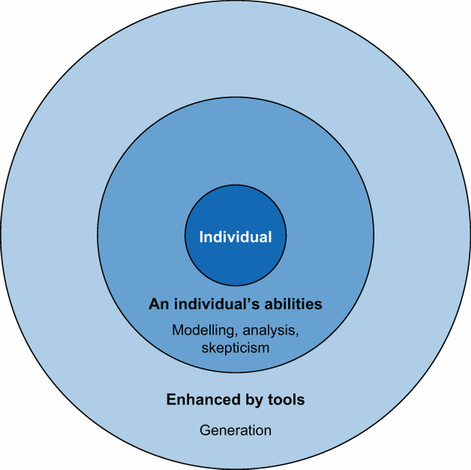
Use the area-of-effect model to relate prompt quality to the testing skills and context needed for valuable outputs. section 5.3.1