liveBook · Manning

Structured data

As explained in Grokking AI Applications

Structured data is information organized according to a predefined schema of fields, records, tables, or other machine-readable structures.

Structured data organizes information into predictable fields and records, such as a CRM table with customer names, ages, and recent purchases. It lets an LLM apply one general prompt repeatedly across many records rather than handling only conversational text. section 7.0

A structured-data LLM workflow connects:

  • Data sources such as files, business systems, and CRM tables. section 7.0
  • Prompts applied in a loop across records. section 7.0
  • Generated text transformed into fields for databases or downstream systems. section 7.0
Figure 7.1 The LLM’s input text might come from various sources—files, systems, or users.
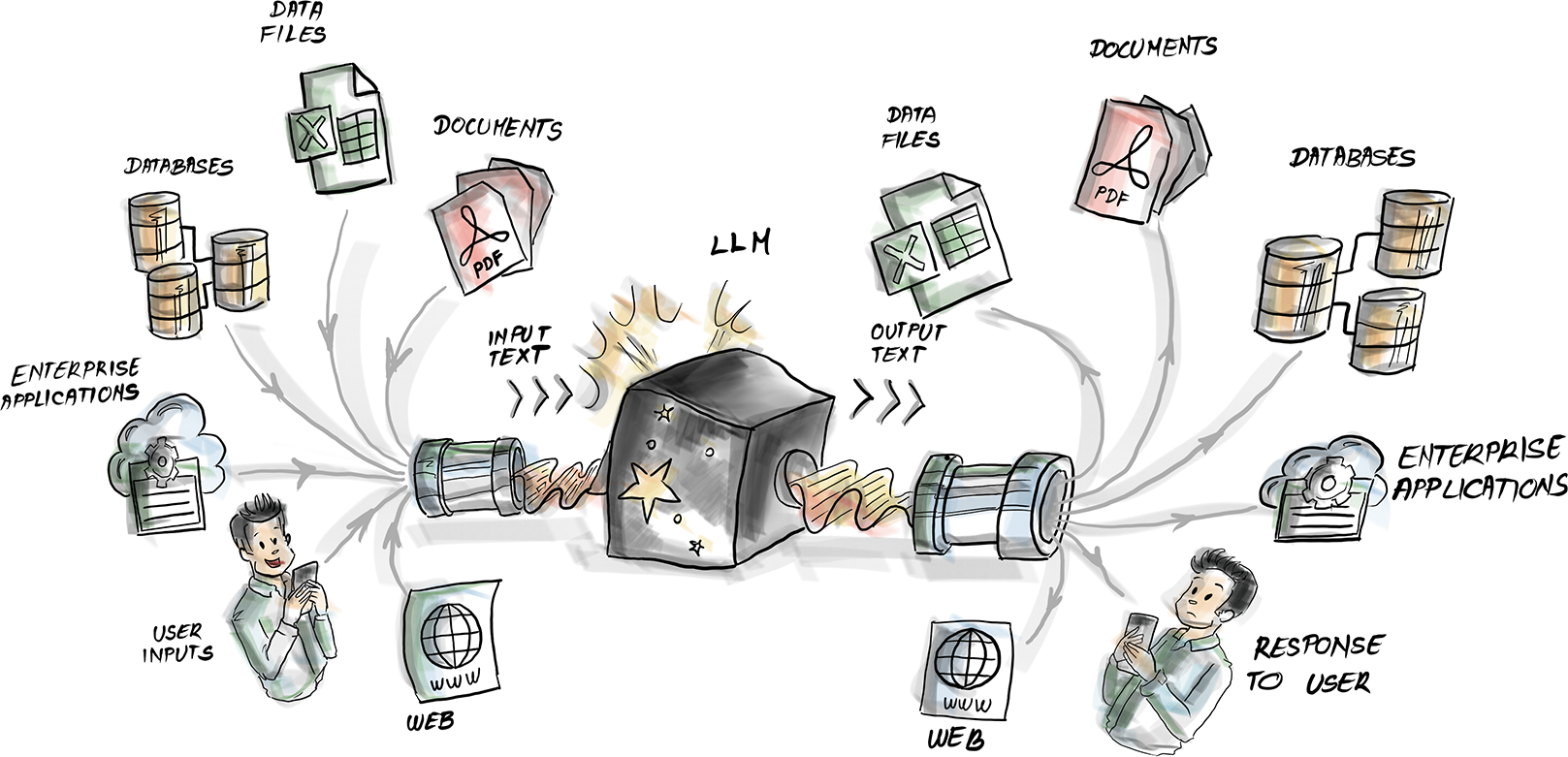
Trace how files, systems, and users can supply input to an LLM application. section 7.0


How Grokking AI Applications covers it

How deep it goes
Explains schemas, record-wise prompting, and output reformatting as the interface between data systems and LLM reasoning.
Examples
Uses CRM customer records with fields for age, name, and recent purchases.
What it assumes
Assumes familiarity with LLM reasoning and introduces the need to connect it with traditional company data landscapes.
What you can do after
Apply it via KNIME to connect structured data systems with LLM prompts and transformed outputs.
How it connects
Connects CRM tables, prompts, LLMs, data pipelines, databases, and downstream systems.

Also explained in

Compare how 24 books explain structured data →

Related concepts

This explainer was generated by Manning's knowledge graph from the text of Grokking AI Applications. The section links point to the parts of the book it draws on.





















