Security training develops practical, role-specific skills for performing security tasks. Education explains security concepts and why they matter; training teaches how to act; awareness reinforces secure behavior. Tailor training to a person’s role and risk exposure. section 17.3 section 17.3.2
Training can use several practical formats:
- Hands-on practice in a controlled environment, such as configuring systems or restoring backups. section 17.3.2
- Workshops that combine instruction, discussion, and group problem-solving. section 17.3.2
- Tabletop exercises that rehearse incident decisions and coordination without affecting live systems. section 17.3.2
- Realistic examples and scenarios that help people retain skills and apply them confidently. section 17.3.2
Match practice to the role
A system administrator may practice access-control tasks, while other employees may learn to recognize phishing. An incident-response workshop can help participants rehearse decisions and coordination. section 17.3 section 17.3.2
Figure 17.1 Education, training, and awareness mapped to delivery methods, and outcomes in a security program
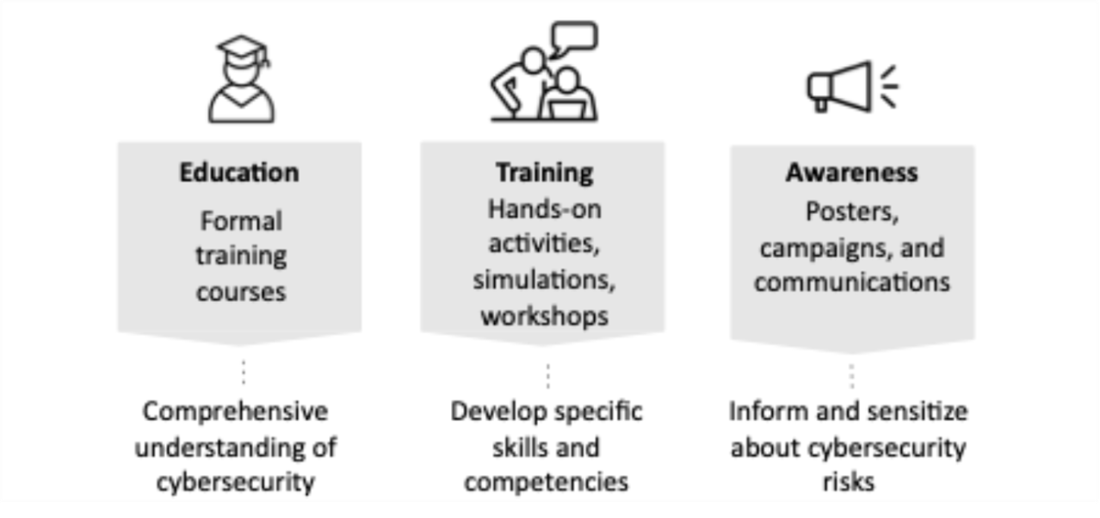
Compare education, training, and awareness by their delivery methods and outcomes. section 17.3