A feedback loop is an iterative interaction in which earlier prompts and context shape later inputs and outputs, while user reactions guide the next refinement. ChatGPT supports this through dialogue; Copilot and CodeWhisperer provide faster, IDE-based advice. section 2.4
Use the loop to turn an initial AI suggestion into a more considered result:
- Start with a concrete question or scenario. section 2.4
- Review the response, challenge its assumptions, and ask for alternative angles. section 8.1.2
- Request specific actions, document useful suggestions, and refine the next prompt using what you learned. section 8.1.2
- Revisit the discussion as the project changes, then cross-reference advice with current resources and relevant experts. section 8.1.2
Security brainstorming loop
For a cloud-based e-commerce application, begin by asking about likely threats. Follow up about session hijacking, denial-of-service risk, cross-site scripting, container security, microservice communication, and mitigation steps. As the architecture changes, provide updated design documentation for another review rather than treating the first response as final. section 8.1.2
Figure 8.1 The workflow of a brainstorming session with ChatGPT
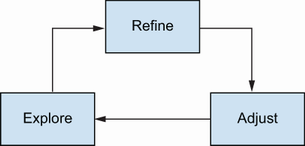
Use the workflow figure to trace how a brainstorming session moves from initial questions through challenge, action items, refinement, and review. section 8.1.2





























