Iterative development improves software through small changes, each followed by evaluation. Keep each step easy to understand and test, so feedback can guide the next change and working code remains available. section 2.4
A practical cycle:
- Make a small change, then run and test it. section 2.4
- Use the results to spot problems or adjust direction before making the next change. section 2.4
- Start with a simple working baseline and add complexity in manageable steps; if a change causes trouble, return to the previous working version. section 2.4
- For infrastructure, write a little Terraform, apply it, and test what was created before repeating the cycle. section 7.8.1
The same approach supports large changes such as moving a monolith toward microservices: avoid a big-bang conversion, work in small chunks, test thoroughly, and keep the product working while restructuring. section 12.6
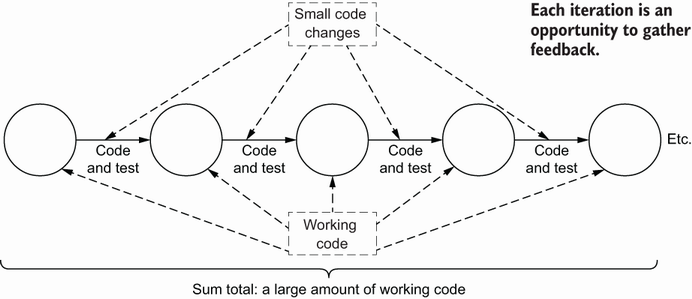
Shows how small, well-tested changes accumulate into a larger body of working code. section 2.4





























