liveBook · Manning

Database

As explained in Spring Start Here, Second Edition

A database is an organized collection of data stored for retrieval and management.

A database is where a backend application can persist data it manages, such as bank transactions. section 1.3.1

Banking transactions

A banking backend manages transactions and persists some of its data in a database. Customers can access their accounts through web or mobile apps. section 1.3.1

Figure 1.5 A backend app interacts in several ways with other apps and uses databases to manage data. Usually, a backend app is complex and may require the use of various technologies. Frameworks simplify the implementation by providing tools you can use to implement the backend solution faster.
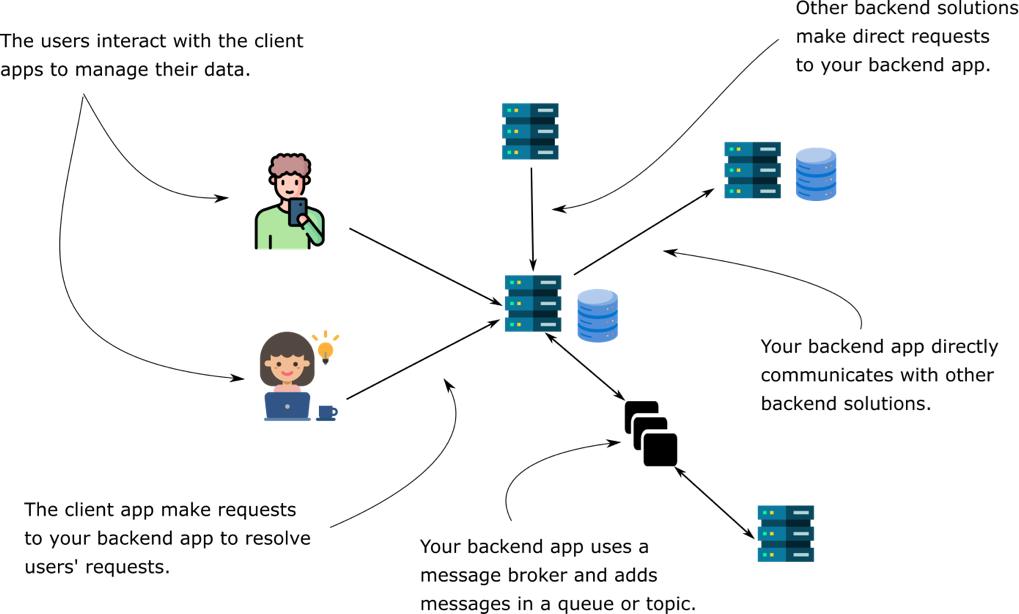
See how databases fit into a backend system that also serves client applications and communicates with other solutions. section 1.3.1


How Spring Start Here, Second Edition covers it

How deep it goes
Situates database persistence in backend architecture but does not explain database internals or access procedures.
Examples
Uses bank transactions and web or mobile banking clients to illustrate persisted data.
What it assumes
Assumes a Java developer but no prior knowledge of frameworks or Spring.
What you can do after
Apply Spring to connect an application to a database and work with persisted data.
How it connects
Links databases with backend applications, data persistence, client applications, and Spring.

Also explained in

Compare how 29 books explain database →

Related concepts

This explainer was generated by Manning's knowledge graph from the text of Spring Start Here, Second Edition. The section links point to the parts of the book it draws on.


























