liveBook · Manning

Unsupervised learning

As explained in Grokking AI Applications

Unsupervised learning is a machine learning approach that discovers patterns or structure in data without labeled examples.

Unsupervised learning discovers patterns and structure in data without labeled examples. Like children grouping similar toy shapes, it finds its own rules rather than learning from supplied answers. section 1.5

Learning language without direct supervision

GPT uses unsupervised learning to read a massive collection of documents, learn patterns such as grammar, and predict the most likely next word. Later supervised and reinforcement learning stages improve its conversational behavior. section 1.5

Figure 1.5 The three types of machine learning: unsupervised, supervised, and reinforcement
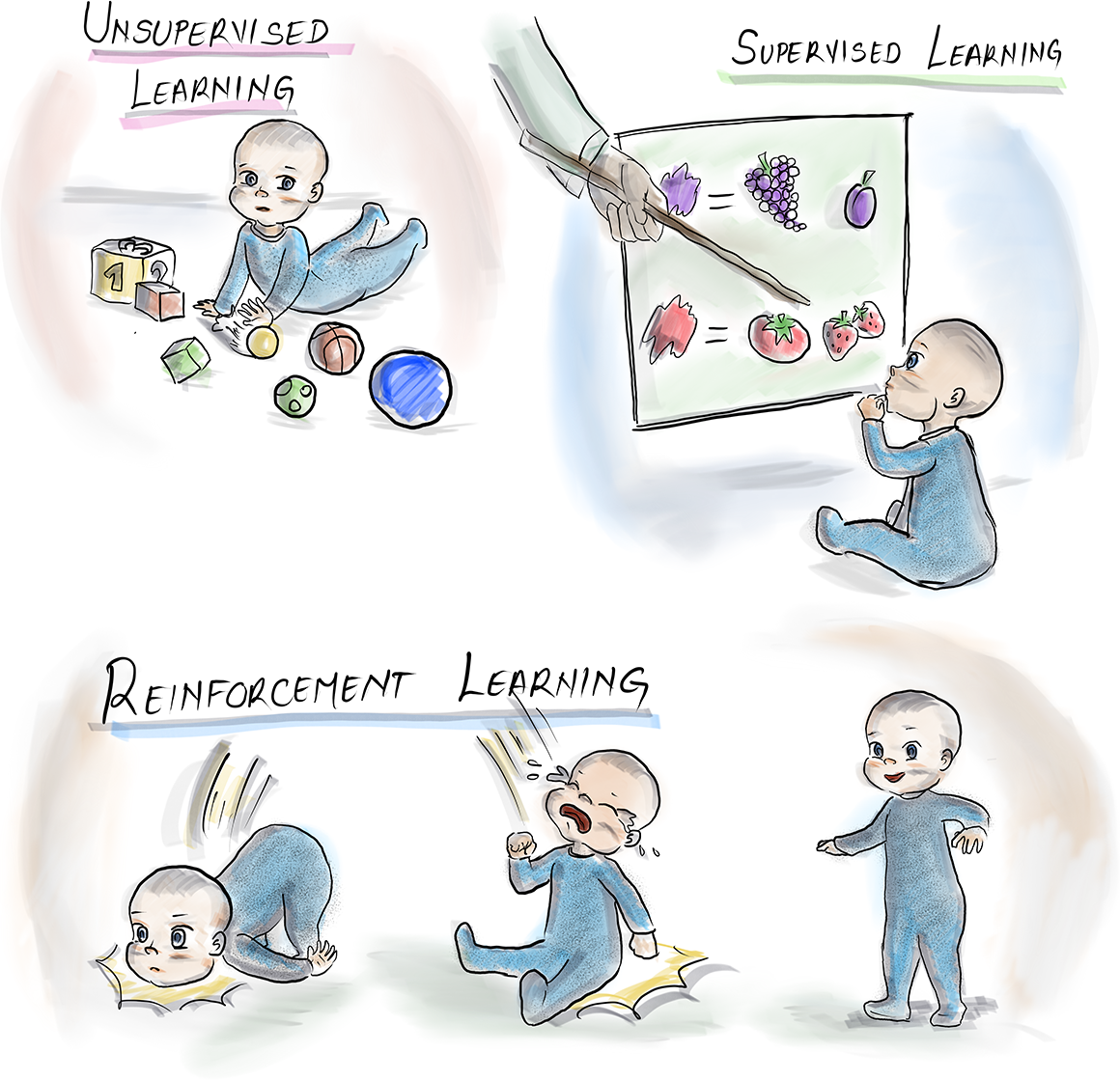
Compare unsupervised learning with supervised learning and reinforcement learning across their sources of learning and feedback. section 1.5


How Grokking AI Applications covers it

How deep it goes
Defines pattern discovery and illustrates document reading and next-word prediction without detailing algorithm internals.
Examples
Uses grouped toy shapes, document collections, grammar learning, and next-word prediction as concrete examples.
What you can do after
Understand how GPT acquires language patterns before supervised and reinforcement learning improve conversation.
How it connects
Contrasts unsupervised learning with supervised learning and reinforcement learning in a staged language-model workflow.

Also explained in

Compare how 20 books explain unsupervised learning →

Related concepts

This explainer was generated by Manning's knowledge graph from the text of Grokking AI Applications. The section links point to the parts of the book it draws on.
















