liveBook · Manning

Unsupervised learning

As explained in Software Testing with Generative AI

A machine-learning approach that trains a model on unlabeled data to discover implicit patterns or structure.

Unsupervised learning trains an algorithm on unlabeled data without paired outputs, allowing a model to learn implicit patterns and structure. section 2.1

Training processes large datasets into model weights that support prediction; unlike supervised learning, the data is not organized around labeled outcomes. section 2.1 section 2.1

Keyboard prediction

A phone keyboard assigns probabilities to possible words after “I am,” favoring “away” over unlikely alternatives such as “sandalwood.” section 2.1

Figure 2.1 Probability distribution in action
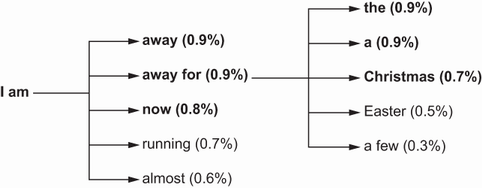
Visualizes how a probability distribution ranks possible next words. section 2.1


How Software Testing with Generative AI covers it

How deep it goes
Defines unlabeled-data training and implicit pattern learning, then sketches datasets, algorithms, probabilities, and model weights.
Examples
Uses keyboard next-word prediction and contrasts it with labeled medical data paired with illness outcomes.
What it assumes
Distinguishes labeled inputs and paired outcomes from unlabeled data without requiring prior algorithmic detail.
What you can do after
Evaluate/understand how unlabeled training produces predictive probabilities and implicit patterns.
How it connects
Contrasts supervised learning and connects probability distributions, predictive models, and language modeling.

Also explained in

Compare how 20 books explain unsupervised learning →

Related concepts

This explainer was generated by Manning's knowledge graph from the text of Software Testing with Generative AI. The section links point to the parts of the book it draws on.
















