Performance measures how effectively a system does its job. In cloud computing, it is not permanently fixed by a server’s hardware budget: capacity can be available when demand arrives and paid for when needed. section 2.3.2
Performance decisions usually balance speed, scale, and cost:
- Azure Functions can absorb spikes in image-processing work, with cost increasing mainly as execution volume increases. section 2.3.2
- Premium file shares use SSD-backed storage for sub-10-millisecond I/O and low latency, but charge for allocated rather than used capacity. section 5.4.1
- Database choices trade performance and scalability against price, tuning effort, query speed, security, and disaster-recovery capabilities. section 10.3.4
A practical performance choice
Banning Books expects peak shopping periods and needs a database that can handle high performance and scalability. Azure SQL DB offers strong capabilities but may cost more; MySQL is generally cheaper but may need manual tuning and can run complex queries more slowly. section 10.3.4
Figure 5.11 HDD vs. SSD storage properties
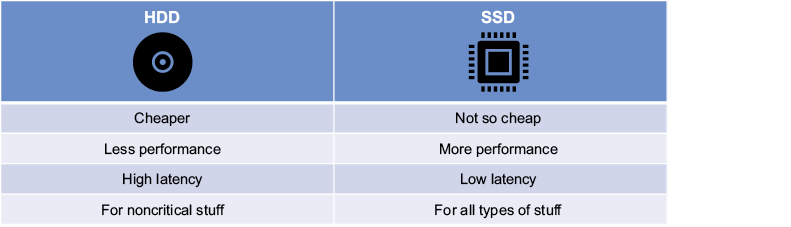
Compare HDD and SSD properties to see why storage hardware affects I/O speed, latency, and pricing. section 5.4.1







































