Performance concerns speed and responsiveness: whether a system delivers results quickly enough for its users. It is not a property of code style. Readable, maintainable code can still execute slowly, while difficult code can appear fast when powerful hardware compensates for it. section 8.3
Treat performance as a constraint rather than an isolated goal. Sustainability asks for an acceptable level of responsiveness using the smallest practical infrastructure; that overlap is efficiency. Faster behavior alone does not establish lower environmental impact, and clean code alone does not establish fast execution. section 8.3 section 8.6
Use performance thinking to make deliberate tradeoffs:
- Define what responsiveness is acceptable before adding hardware or optimizing code. section 8.3
- Seek acceptable performance with minimal hardware resources, rather than equating performance with maximum speed. section 8.3 section 8.6
- Investigate CPU work, memory use, communication, storage, and workload timing when resource use or operational cost is a concern. section 8.6
Tracing an intermittent database slowdown
When an input-data problem cannot be reproduced, reconstruct its timeline from logs, metrics, and traces. A JDBC-connection failure that recurs at the same times as database-host CPU saturation points to intermittent server overload, turning scattered evidence into a performance hypothesis. section 10.3.2
Figure 8.1 How sustainable coding fits with clean code and performance
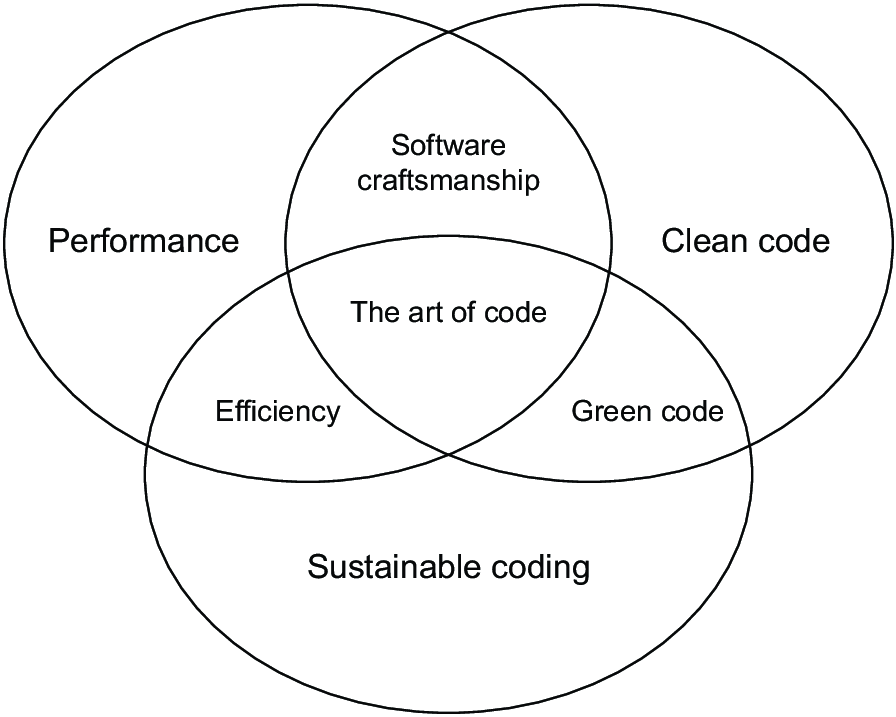
The diagram positions efficiency between sustainability and performance, alongside the separate concern of clean code. section 8.3







































