A metric is an aggregate measurement of system behavior. In API observability, metrics reveal request volume, response times, usage patterns, unusual trends, and potential threats. section 11.2 section 11.7
Use metrics to:
- Measure low-level system performance and higher-level API usage. section 11.2
- Track requests per second, average response times, and other aggregate behavior. section 11.7
- Identify unusual trends, usage outliers, and potential endpoint-abuse threats. section 11.2 section 11.7
- Demonstrate whether a security-focused API development approach is improving outcomes. section 2.5
Spotting unusual API use
Track API requests by user and observe that user cc35ff86 sends an unusual number of requests. That outlier may indicate a malicious actor or endpoint abuse. section 11.2 section 11.7
Figure 11.7 Low-level performance metrics help us understand the state of our system; higher-level API metrics help us understand how users interact with our APIs.
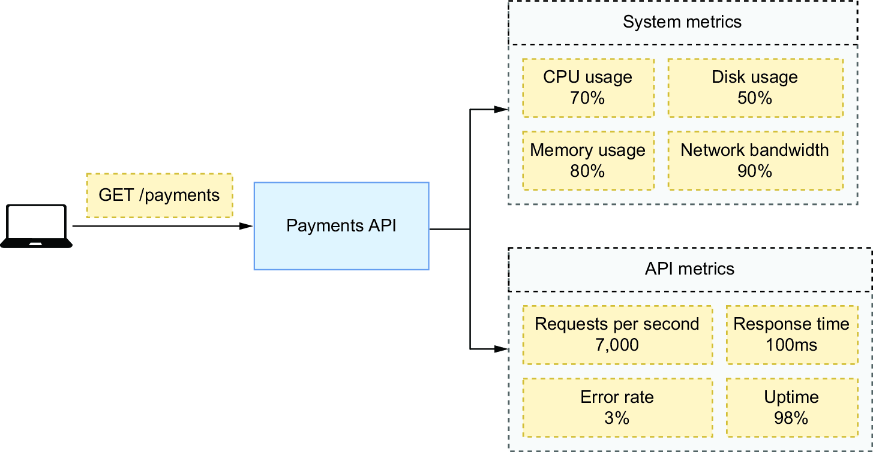
Compare low-level performance metrics with higher-level API metrics to connect system condition with user behavior. section 11.2
Figure 11.8 By tracking higher-level metrics about API use, we can detect outliers and potential threats. In this case, we observe that user cc35ff86 is sending an unusual number of requests, which could indicate that they are a malicious actor.
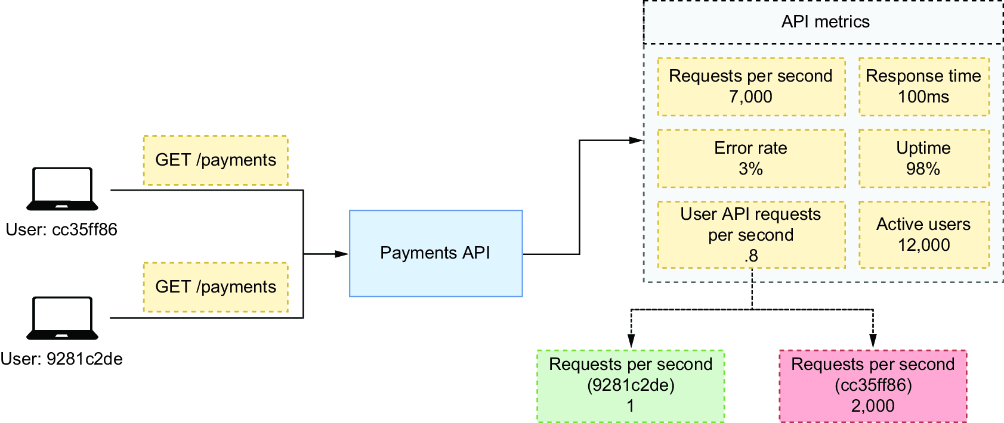
Inspect how request-volume metrics expose outliers and potential malicious activity. section 11.2







































