A pipeline is an ordered workflow that moves work toward an outcome. For software, build and deployment pipelines connect a code commit to running code in test and production environments, often through automated steps. section 13.2.2
Pipelines also describe business and customer flows. Mapping granular steps and user journeys makes missed opportunities, bottlenecks, and modernization needs visible across the technical and organizational system. section 3.2.3
Use a pipeline view to investigate:
- Where users drop out of a funnel, such as after a basket expires or a subscription is canceled. section 7.3.1
- Where handoffs create frustration, such as customer-support workflows that move between agents and produce contradictory information. section 7.3.1
- Where delivery or environment setup slows change, especially when provisioning remains manual instead of automated. section 13.2.2
From commit to production
An internal developer platform can provide a golden-path pipeline that builds code, creates or configures environments, runs each delivery step, and deploys to production. Lead time for changes measures the elapsed time from commit to deployment. section 13.2.2
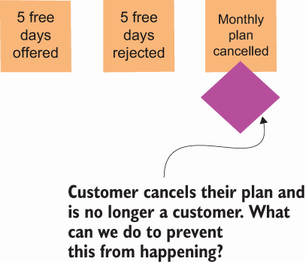
A funnel diagram helps locate the point where customers leave a pipeline and revenue is lost. section 7.3.1















































